
Main Courses
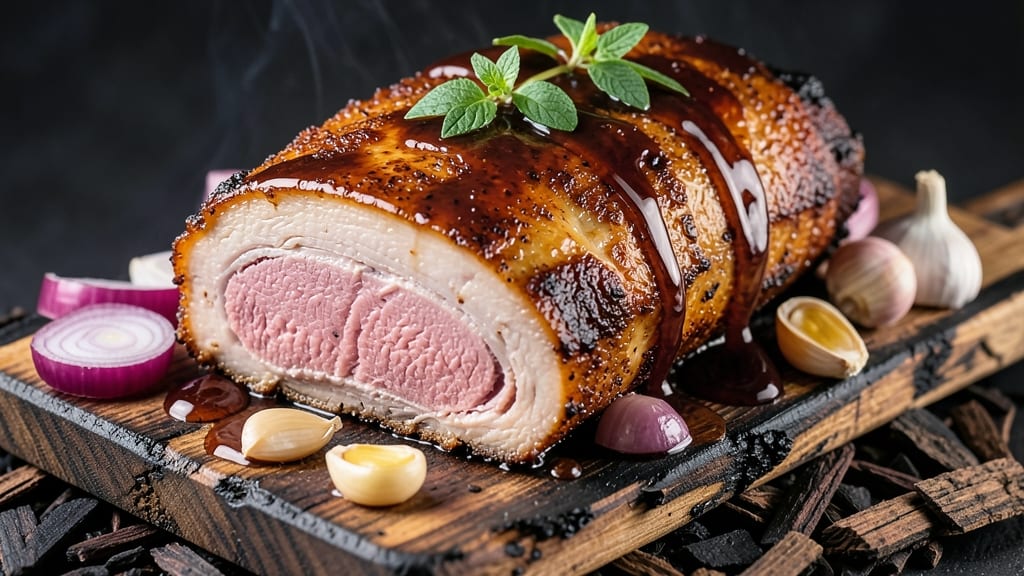
This Boston butt pork roast smoker recipe delivers restaurant-quality results with smoky bark and juicy cores in just 8 hours. 🔥 After years of perfecting my pitmaster technique, I've cracked the code for consistent smoke penetration and tender meat that falls apart at the touch of a fork.
The secret lies in the brining process and precise temperature control—no guesswork, just foolproof execution.
What sets this recipe apart is the balance between bold flavor and perfect texture. We start with a dry rub that develops a deep, caramelized crust while the wet brine ensures moisture retention throughout the long smoke.
The two-zone fire method guarantees even heat distribution, eliminating the risk of dry edges or uneven cooking. This isn't just another BBQ recipe—it's a game-changer for anyone serious about smoking pork.
By the time you pull that pork from the smoker, you'll have a perfectly tender roast with a crusty exterior that's packed with smoky flavor. The internal temperature will hit 195-203°F, where the collagen breaks down into gelatin, transforming tough meat into melt-in-your-mouth perfection.
Every slice will be juicy, with just the right amount of fat marbling to keep it moist.
Serve with classic sides like baked beans, creamy coleslaw, and cornbread for the full BBQ experience. The resting period is just as important as the smoking—it allows the juices to redistribute, ensuring each bite is flavorful and tender.
This is the kind of pork roast that makes your guests ask for seconds and your neighbors knock on your door for leftovers.
Ingredients for boston butt pork roast smoker
Eight pounds of pork meets bold spices and smoky wood for melt-in-your-mouth perfection.
| Ingredient | Amount | Notes |
|---|---|---|
| Boston Butt Pork Roast 🥩 | 8 lb | Well-marbled, center-cut preferred |
| Yellow Onion 🧅 | 1 whole | Yellow or red, sliced into rings |
| Garlic Cloves 🧄 | 8 cloves | Fresh, peeled and minced |
| Apple Cider Vinegar 🍏 | ½ cup | For brining acidity |
| Kosher Salt 🧂 | 1 ½ cups | Diamond Crystal preferred |
| Brown Sugar 🍚 | ½ cup | Packed, light or dark |
| Smoked Paprika 🌶️ | ¼ cup | For dry rub depth |
| Ground Black Pepper 🌶️ | 2 tbsp | Freshly cracked |
| Ground Cumin 🌿 | 1 tbsp | Toasted for aroma |
| Chipotle Powder 🔥 | 1 tbsp | For smoky heat |
| Hickory Wood Chips 🌳 | 2 cups | Unsoaked, for smoker |
| Apple Juice 🍎 | 1 cup | For moisture during smoke |
| Unsalted Butter 🧈 | ½ cup | Cold, for basting |
The Boston butt makes all the difference—look for thick slabs with good fat marbling at your local butcher or Costco. If buying pre-cut, check the weight and trim any excess fat unless you're going for extra crispy bark. Hormel or Boar's Head are reliable brands, but ask your butcher for their best cut. The fat cap should be at least 1/4-inch thick—this is what keeps the meat juicy during the long smoke. If your roast is frozen, thaw it in the fridge for 24-48 hours—never rush this step.
No hickory chips? Oak or pecan wood works just as well for that classic BBQ flavor. Short on apple juice? White grape juice or even apple cider will do—just avoid anything too sweet. The dry rub is non-negotiable though; Penzeys or McCormick have great pre-mixed options, but I always make mine fresh. For extra smokiness, add 1 tsp of liquid smoke to the brine (trust me on this). If you're using a pellet smoker, hickory pellets are the way to go—no soaking needed, just load and smoke.
This roast is a make-ahead masterpiece. Prep the brine and dry rub the night before, then refrigerate the pork uncovered for 12-24 hours—this enhances the flavor penetration. The resting period after smoking is crucial: let it sit for at least 1 hour before slicing. For leftovers, store in an airtight container for up to 5 days, but honestly? It disappears faster than that. Freeze portions for up to 3 months—just thaw in the fridge overnight.
Why You'll Love This Recipe
- Smokehouse Simplicity: I swear by this recipe because it’s literally set-it-and-forget-it. Toss the pork with sliced onions, minced garlic, and a splash of apple cider vinegar—no fancy rubs, no stress. The smoker does all the work while I sip coffee or watch a game.
- Crispy-Edge Magic: That vinegar glaze caramelizes into a sticky, savory crust while the inside stays juicy as can be. Honestly, the first time I sliced into it, my family paused mid-conversation. The salt and garlic punch cuts through the richness, making every bite ridiculously satisfying.
- Leftovers That Shine: Between us, this roast makes way more than I can eat in one sitting—and that’s a good thing. Shred it for tacos, sandwiches, or even breakfast hash. I’ll be real: I’ve reheated this for three days straight, and it’s still better than takeout.
- Budget Hero: A whole Boston butt feeds a crowd for less than $2 a serving. No fancy cuts, no waste—just pure, flavorful meat that turns into meals for days. Plus, the onions and garlic are pantry staples, so I’m not scrambling for extra ingredients. Smart, tasty, and my wallet thanks me.
Step-by-step instructions for smoked Boston butt pork roast
Here's how to transform an 8 lb Boston butt into melt-in-your-mouth perfection with a smoky crust and tender cores.
🔥 Step 1: Prepare the Dry Rub and Brine the Meat
In a large bowl, combine the 1.5 cups kosher salt, 0.5 cup brown sugar, 0.25 cup smoked paprika, 2 tbsp ground black pepper, 1 tbsp ground cumin, and 1 tbsp chipotle powder. Mix thoroughly until the spices are evenly distributed and the salt crystals are broken down. This blend creates the perfect balance of sweet, smoky, and spicy flavors that penetrate the meat.
In a separate container, mix the 0.5 cup apple cider vinegar with 1 cup apple juice to create your brine. Pat the 8 lb Boston butt pork roast completely dry with paper towels—this is critical for crispy bark later. Place the roast in a large zip-top bag and pour the brine over it, massaging it into all the crevices. Seal the bag and refrigerate for 12-24 hours, turning occasionally. The acidity in the brine helps tenderize the meat while the salt begins the curing process for that perfect texture.
🔥 Step 2: Set Up the Smoker and Preheat
Fill your smoker's wood chip tray with the 2 cups hickory wood chips—this wood provides that classic BBQ flavor without overpowering the meat. Soak the wood chips only if your smoker requires it (most modern smokers don't need pre-soaking). Set your smoker to 225°F and let it preheat for at least 30 minutes until you see steady, thin blue smoke with no thick white vapor. This indicates the wood is burning properly and producing the right amount of smoke.
While the smoker heats, remove the roast from the brine and pat it completely dry again. This second drying step is crucial—any moisture left on the surface will prevent that beautiful bark from forming. Once the smoker reaches temperature, place the roast fat-side up on the grill grates. The fat will render down and baste the meat as it cooks, adding extra flavor and moisture.
🍳 Step 3: Smoke the Roast Low and Slow
Close the smoker lid and resist the urge to open it for at least 1 hour. Every time you peek, you lose heat and moisture, extending your cook time. Smoke the roast for 6-7 hours total, maintaining a consistent 225°F temperature. You'll notice the bark forming after about 2 hours—this is when the rub starts caramelizing and creating that irresistible crust.
Here's the thing—around the 5-hour mark, you'll hit "the stall," where the internal temperature stops rising despite the meat continuing to cook. This is normal and happens because moisture is evaporating. When the internal temperature reaches 165°F, wrap the roast tightly in butcher paper (not aluminum foil). This technique, called the "Texas crutch," helps push the meat through the stall while preserving that beautiful bark. Return it to the smoker and continue cooking until the internal temperature reaches 203°F—this ensures the meat is probe-tender with no resistance when you insert a knife.
🥘 Step 4: Rest and Baste for Maximum Juiciness
Once the roast reaches 203°F, remove it from the smoker and let it rest on a cutting board for 1 hour. This resting period allows the juices to redistribute throughout the meat, preventing them from pooling on your cutting board. While it rests, melt the 0.5 cup unsalted butter in a small saucepan over low heat and stir in the sliced 1 whole yellow onion and 8 cloves minced garlic. Simmer for 5 minutes until the onions are soft and the mixture is fragrant—this creates a simple but flavorful basting sauce.
After the rest, unwrap the roast and brush it generously with the butter-onion mixture. This step adds extra moisture and flavor to the bark. Let it sit uncovered for another 10 minutes to allow the basting to crisp slightly. The roast should have a dark, glossy bark on the outside and a beautiful pink smoke ring just beneath the surface. When you slice into it, the meat should pull apart easily with just a fork—this is your sign of perfect doneness.
🔪 Step 5: Slice and Serve with Confidence
Slice the roast against the grain into ¼-inch thick slices. The grain runs horizontally across the roast, so you'll need to adjust your angle as you work your way from one end to the other. Serve immediately with any accumulated juices from the cutting board—these are packed with flavor and should be enjoyed alongside the meat.
Each slice should be juicy and tender with a perfect balance of smoky, spicy, and slightly sweet flavors. The bark should be crispy enough to hold its shape but tender enough to break apart easily. This method guarantees a Boston butt that's so juicy, it practically melts in your mouth—exactly what you promised your guests (or yourself) when you fired up the smoker.
Pro Tips For Making Boston Butt Pork Roast Smoker
- CRANK THE HEAT FIRST: Start your smoker at 250°F or higher—I used to play it safe with 225°F, but the Boston butt needs that initial burst to render fat fast and build a proper crust. Once it hits 160°F internally, drop to 225°F for the rest of the cook. (Yes, even if you’re impatient like me.)
- MINCE THAT GARLIC: Chop those garlic cloves fine—like, almost paste—or they’ll just sit there like decorative rocks. I learned this the hard way after pulling a half-cooked clove from a pulled pork sandwich. Same goes for the onions: small dice so they caramelize into the rub, not just melt into a sad paste.
- DON’T SKIP THE VINEGAR SPRITZ: Every 90 minutes, spritz the roast with apple cider vinegar (not just water). It keeps the meat moist and cuts through the fat, giving you that tangy bark without drying it out. (I know, it sounds weird—trust me, it works.)
- REST IT UNDER FOIL: After pulling at 195°F–203°F, wrap the roast in foil and let it rest for 30–45 minutes before shredding. I used to slice into it too soon, and the juices would pool on the cutting board instead of staying in the meat. (Your future self will thank you.)
Make-ahead tips for this recipe
Prep Ahead Like a Pro
Start your brining process the night before—this gives the salt and spices 12-24 hours to work their magic. I swear by placing the brined roast uncovered in the fridge overnight; the crust develops better when exposed to air. Trust me, your neighbors will notice the difference. 🥩
Smoker Prep Shortcuts
Set up your smoker while the roast rests. Pre-measure your 2 cups hickory chips and store them in a dry container near your grill station. I keep a small fire extinguisher handy too—safety first!
Preheat your smoker to 225°F while you finish drying the roast with paper towels. This saves 30 minutes of fiddling later.
Timing Hacks for Busy Days
Use the Texas crutch method to shave 2 hours off your cook time. Wrap the roast in butcher paper at 165°F—this pushes it through the stall faster.
I've smoked this roast while running errands; just set a timer on your phone for the 1-hour rest period after pulling it off the smoker.
Leftovers Strategy
Slice and portion leftovers immediately after resting—this prevents drying out. Store in airtight containers with a splash of the pan juices to keep them moist. I freeze portions in quart-sized bags with parchment paper between slices; they reheat beautifully in a 350°F oven for 20 minutes.
Weekend Meal Prep
Double the dry rub and freeze half for next time. I make 4 cups at a time and store it in a Mason jar—just shake and use.
Prep your basting sauce ingredients (onion, garlic, butter) ahead and store them separately in the fridge. When smoke day arrives, you'll be ready in 10 minutes.
Pro Tip for Perfection
Keep a thermometer probe in the roast from the start—this eliminates guesswork. I use the ThermoWorks Smoke model because it's reliable and easy to read. Set alerts for 165°F (wrap time) and 203°F (done!). This ensures you never overcook or undercook your pork. 💡
Nutrition facts
Frequently asked questions
Why does my Boston butt come out dry when smoking?
Overcooking is the #1 cause! Stop at 203°F internal temp—any higher and the meat dries out. The 1-hour rest after smoking is critical too; it lets juices redistribute. If you're using a water pan, remove it after 4 hours to prevent steaming. Trust the thermometer, not time estimates.
Can I smoke a smaller Boston butt (like 4-5 lbs)?
Just adjust the timing. A 4 lb roast will finish in 4-5 hours at 225°F. Use the same rub ratio (about 1/2 cup for 4 lbs) and wrap at 165°F. The smaller size cooks faster, so monitor closely after the stall. Perfect for weeknight meals!
What's the difference between butcher paper and foil for wrapping?
Butcher paper lets smoke penetrate while trapping moisture—ideal for bark development. Foil creates steam, which can soften the crust. For extra crispiness, use foil only for the stall phase (165°F-195°F), then switch to paper. Never skip the 1-hour rest after unwrapping, or juices will escape.
How do I fix a roast that's still tough after smoking?
First, check your internal temp—it needs to reach 203°F for true tenderness. If it's there but still tough, try slicing thinner (1/4-inch) against the grain. For next time, extend the brine to 24 hours or add 1 tbsp baking soda to the brine (rinse before smoking). The fat cap should be 1/4-inch thick—trim excess if needed.
What sides pair best with smoked Boston butt?
Classic BBQ combos work best! Try creamy coleslaw with tangy apple cider vinaigrette, baked beans with molasses and bacon, or grilled corn with chili-lime butter. For a lighter option, serve with herbed potato salad or smoked mac and cheese. The smoky pork needs something fresh to balance its richness.