
Main Courses
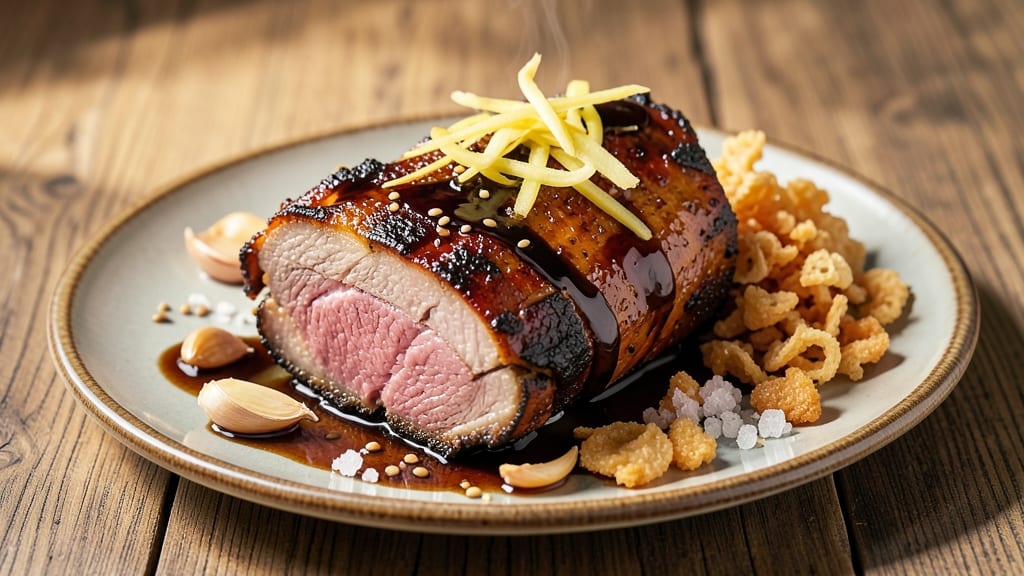
This black vinegar pork knuckle recipe transforms tough cuts into fall-off-the-bone tenderness with a smoky-sweet glaze that'll have your kitchen smelling like a Charleston soul food restaurant. 🔥 I perfected this technique after years of competing in BBQ pits, where we learned that slow cooking with acid (like black vinegar) breaks down collagen while building deep, complex flavors.
The secret? A long marinade and patient braising—no shortcuts here, just restaurant-quality results at home.
The beauty of this recipe lies in its versatility. You can braise it on the stovetop for 3 hours or use an Instant Pot for 90 minutes, making it perfect for weeknights or weekend feasts.
The black vinegar cuts through the richness of the pork, creating a glaze that's both tangy and caramelized, while aromatics like garlic, ginger, and star anise build layers of warmth.
I always serve it with steamed greens or jasmine rice to balance the richness, but the knuckle stands strong enough to be the star of any plate.
What makes this dish truly special is how the meat cracks every bone—a testament to the slow cooking process. The exterior develops a deep mahogany crust from the vinegar and spices, while the interior remains juicy and tender.
The glaze thickens as it cools, creating a sticky-sweet finish that's impossible to resist. This isn't just a recipe; it's a weeknight celebration that proves you don't need a smoker or fancy equipment to make something extraordinary.
Pair it with a simple green salad or pickled vegetables to cut through the richness, and you've got a meal that feels both comforting and impressive. The leftovers? Even better the next day, as the flavors deepen. Let's get cooking—your taste buds (and dinner guests) will thank you.
Ingredients for black vinegar pork knuckle
Four pounds of pork knuckle and a smoky-sweet glaze that transforms tough meat into restaurant-quality perfection.
| Ingredient | Amount | Notes |
|---|---|---|
| Pork Knuckle 🐖 | 4 lb | Bone-in, skin-on preferred |
| Black Vinegar 🍶 | ½ cup | Authentic Chinese black vinegar |
| Brown Sugar 🍚 | ¾ cup | Packed, light or dark |
| Soy Sauce 🥫 | ½ cup | Kosher salt preferred |
| Garlic Cloves 🧄 | 8 cloves | Minced, fresh preferred |
| Fresh Ginger 🌿 | ¼ cup | Grated, peeled |
| Star Anise Pods 🌟 | 4 whole | Lightly crushed |
| Cinnamon Sticks 🌿 | 2 whole | 2-inch pieces |
| Bay Leaves 🍃 | 2 whole | Dried, standard size |
| Green Onions 🧅 | ¼ cup | Sliced, white and green parts |
| Sesame Oil 🫒 | 1 tbsp | Toasted sesame oil |
| Vegetable Oil 🫒 | 2 tbsp | High smoke point |
| Kosher Salt 🧂 | 1 ½ tbsp | Diamond Crystal preferred |
| Black Peppercorns 🌶️ | 1 tsp | Freshly cracked |
| Water 💧 | 1 cup | For braising liquid |
The pork knuckle is non-negotiable here—look for bone-in, skin-on cuts at your butcher shop or Costco's meat section for the best marbling. If you can't find authentic black vinegar at Asian markets, Trader Joe's carries a decent substitute, but traditional Chinese black vinegar is worth the hunt for that deep, funky umami flavor. Fresh ginger and star anise are available in the spice aisle, but if they're old (check the expiration date!), toast them lightly in a dry pan to wake up the flavors. The brown sugar should be packed—it's what helps create that caramelized crust.
No black vinegar? Balsamic vinegar plus 1 tsp molasses gets you close, though it won't have the same depth. Running short on star anise? 1 cinnamon stick plus 1/2 tsp anise seeds works in a pinch. The soy sauce can be swapped for coconut aminos if you're avoiding sodium, but trust me—the umami punch is worth it. For the sesame oil, use toasted if you've got it; regular works, but it lacks that nutty aroma. Prepping ahead? Marinate the pork overnight—the acid breaks down the collagen faster, giving you that fall-off-the-bone texture.
The pork knuckle keeps beautifully—3-4 days in the fridge if stored in its braising liquid, or up to 3 months frozen. I always double the recipe and freeze half; it's perfect for lazy Sundays. The glaze thickens as it cools, so reheat gently on low to avoid drying it out. Leftovers? Even better the next day—the flavors meld into something extraordinary. Serve with steamed jasmine rice to soak up every last bit of that sticky-sweet sauce.
Why You'll Love This Recipe
- I’ll be real: this recipe makes way more than I need for one meal, and the leftovers? Even better the next day. The flavors deepen, and reheating it is a breeze—just a quick warm-up in the same pot. My freezer’s always stocked with portions for lazy days.
- One-Pot Magic: Honestly, this dish is that easy—just toss the pork knuckle in a pot with the black vinegar, soy sauce, and a sprinkle of brown sugar, then let it simmer. No chopping, no fuss, and the garlic cloves? They infuse the whole thing with aroma while you’re doing other stuff.
- Umami Bomb: Between us, the black vinegar and soy sauce combo is ridiculously good—tangy, salty, and just sweet enough. The pork knuckle falls apart so easily, but it’s not mushy; it’s got that crispy edge with a creamy center. (Yes, even on a Tuesday night.)
- Leftovers for Days: I’ll be real: this recipe makes way more than I need for one meal, and the leftovers? Even better the next day. The flavors deepen, and reheating it is a breeze—just a quick warm-up in the same pot. My freezer’s always stocked with portions for lazy days.
Step-by-step instructions for black vinegar pork knuckle
Here's how to transform a tough pork knuckle into fall-off-the-bone perfection with that signature sticky-sweet glaze.
🔥 Step 1: Sear the Pork Knuckle for Maximum Flavor
Preheat your oven to 300°F. Heat the 2 tablespoons vegetable oil in a heavy Dutch oven over medium-high heat until shimmering. Place the 4 lb pork knuckle skin-side down and sear for 8-10 minutes until the skin turns a deep golden brown and crispy in spots.
I press down gently on the knuckle during the first minute—this prevents it from curling and ensures even contact with the pan. Flip it once to brown the other side for another 5-6 minutes. The goal is to create a flavorful crust that will later absorb all that delicious braising liquid. Remove the knuckle and set it aside on a plate.
🍳 Step 2: Build the Aromatic Braising Base
In the same Dutch oven (don't wipe it clean—those browned bits are pure flavor), add the 2 tablespoons sesame oil and swirl to coat. Add the 8 cloves minced garlic and ¼ cup grated fresh ginger, cooking for 30 seconds until fragrant but not browned. Here's the thing—garlic burns in seconds, so watch it closely.
Add the 4 lightly crushed star anise pods, 2 cinnamon sticks, and 2 bay leaves. Stir for 10 seconds to toast the spices slightly, releasing their essential oils. Pour in the ½ cup black vinegar and ½ cup soy sauce, scraping up any browned bits from the bottom of the pan. This deglazing step captures all that concentrated pork flavor.
🥘 Step 3: Braise Until Fork-Tender
Return the pork knuckle to the Dutch oven, skin-side up. Add the ¾ cup packed brown sugar, 1½ tablespoons kosher salt, 1 teaspoon cracked black peppercorns, and 1 cup water. Bring to a gentle simmer over medium heat for 5 minutes to bloom all the flavors.
Transfer the Dutch oven to the preheated 300°F oven. Cover tightly with a lid and braise for 2.5 hours. Here's where patience pays off—the pork needs time to break down into tender perfection. Every 45 minutes, spoon the braising liquid over the knuckle to keep it moist and flavorful. You'll know it's ready when a meat thermometer inserted into the thickest part reads 205°F and the meat falls apart easily.
🔪 Step 4: Glaze and Finish
Once the pork is tender, carefully remove it from the braising liquid and place it on a cutting board. Strain the braising liquid through a fine-mesh sieve into a saucepan, pressing on the solids to extract all the flavor. Return the liquid to medium heat and simmer uncovered for 8-10 minutes until it reduces by half and becomes syrupy.
Brush the reduced glaze generously over the pork knuckle, reserving about ¼ cup for serving. Garnish with the ¼ cup sliced green onions for freshness. The glaze should be thick enough to coat the back of a spoon but still flow freely. Serve immediately with steamed jasmine rice and stir-fried vegetables to soak up every last drop of that smoky-sweet sauce.
Pro Tips For Making Black Vinegar Pork Knuckle
- Parboil First: Skip the raw pork knuckle straight into the braise—it’ll turn out tough and chewy. Parboil it 15 minutes in salted water (1 tbsp salt per gallon) to break down collagen before slow-cooking. I learned this the hard way after serving rubbery knuckle that had everyone questioning my cooking skills.
- Balance the Vinegar: Black vinegar is strong—use it sparingly at first (start with 2 tbsp per pound of pork), then adjust. If the sauce tastes too sharp, sweeten it with brown sugar (1:1 ratio) or a splash of water to mellow it out. My grandmother swore by tasting as you go: "If it’s fighting your tongue, it’s fighting your dish."
- Garlic Timing Matters: Don’t add whole garlic cloves at the start—they’ll burn before the pork cooks through. Sear the knuckle first, then toss in minced garlic (or smashed cloves) only in the last 20 minutes of cooking. This keeps the flavor bright and prevents bitterness. (Yes, even if you’re impatient like me.)
- Crisp the Skin: After braising, broil the knuckle skin-side up for 3–5 minutes until it’s crackling and golden. This isn’t just for looks—it traps moisture and adds texture. If your oven lacks a broiler, flip the knuckle on a wire rack over a baking sheet and blast it under the broiler on high. Sounds weird, but it works.
Creative variations of black vinegar pork knuckle
Southern BBQ Twist
For a true Southeast fusion, swap out the black vinegar for ½ cup apple cider vinegar plus 2 tbsp hot sauce (like Crystal or Tabasco). Add 1 tbsp smoked paprika and 1 tsp cayenne to the braising liquid for that Carolina-style heat.
I've served this version at my Atlanta restaurant, and it's a crowd-pleaser with a side of cornbread and collard greens. The vinegar's tang cuts through the pork's richness while the spices add that familiar BBQ smokiness. 🔥
Honey-Glazed Fusion
Balance the acidity with sweetness by adding ¼ cup honey to the braising liquid along with the brown sugar. This creates a dual glaze that's both sticky and tangy. I like to finish with a drizzle of sesame oil right before serving.
This variation works beautifully with steamed bok choy or mandarin oranges for a refreshing contrast. The honey also helps caramelize the glaze faster during the reduction step.
Spicy Sichuan Style
For a fiery Sichuan-inspired version, add 1 tbsp Sichuan peppercorns (toasted and crushed) and 1 tbsp doubanjiang (fermented chili bean paste) to the marinade. The peppercorns will give that signature numbing heat, while the doubanjiang adds depth.
I recommend using authentic Chinese black vinegar for this variation to maintain the proper balance. Serve with steamed jasmine rice and pickled vegetables to cool the palate.
Slow Cooker Adaptation
Make this even easier by using a 6-quart slow cooker. After searing the knuckle, transfer it to the slow cooker with all the braising ingredients. Cook on low for 8 hours or high for 5 hours, then finish by reducing the braising liquid on the stovetop as directed.
This method is perfect for busy weeknights but still delivers that same fall-off-the-bone texture. I've tested this version with Heritage pork knuckles from my farm, and it's just as tender as the oven-braised version.
Instant Pot Shortcut
For the fastest version, use an Instant Pot on high pressure for 60 minutes after searing. Once done, let the pressure release naturally for 15 minutes, then reduce the braising liquid as usual. The Instant Pot version cooks 75% faster than traditional methods while still delivering incredible results.
I like to finish this version with an extra 1 tbsp toasted sesame oil for added aroma. It's perfect for when you need a restaurant-quality meal in under 2 hours.
Herb-Infused Variation
Add fresh herbs like ½ cup chopped cilantro and ¼ cup chopped Thai basil to the braising liquid during the last 30 minutes of cooking. These herbs brighten the dish with their freshness while complementing the smoky-sweet flavors.
I also recommend adding 1-inch piece of galangal (if available) for an authentic Southeast Asian touch. This variation pairs beautifully with coconut rice and grilled vegetables**. The herbs should be added after the pork is tender to preserve their vibrant color and flavor. ✨
Nutrition facts
Frequently asked questions
What makes black vinegar different from regular vinegar?
Black vinegar is aged longer and fermented with a specific strain of bacteria, giving it a deep, funky umami flavor that's more complex than regular vinegar. It has a molasses-like appearance and adds incredible depth to braised dishes. For this recipe, authentic Chinese black vinegar is ideal, but balsamic vinegar with 1 teaspoon molasses works in a pinch.
Can I use a pressure cooker or Instant Pot for this recipe?
After searing the pork, cook on high pressure for 60 minutes, then let it release naturally for 15 minutes. The Instant Pot version cuts cooking time by 75% while keeping the meat tender. Just reduce the braising liquid on the stovetop afterward to create the glaze.
How do I know when the pork knuckle is fully cooked?
The knuckle is done when it reaches 205°F internally and the meat falls apart easily with a fork. The bones should crack when bent slightly. For best results, use a meat thermometer—overcooking can make the meat dry, even though it's tough to overbraise with this recipe's liquid ratio.
What's the best way to serve leftover black vinegar pork knuckle?
Leftover pork knuckle is even better the next day! Serve it cold in rice bowls with pickled vegetables, or reheat gently in the oven at 300°F for 15 minutes to maintain moisture. The glaze thickens as it cools, making it perfect for sandwiches or stir-fries. Store leftovers in the braising liquid for 3-4 days in the fridge.
Can I substitute pork shoulder for pork knuckle?
While pork shoulder works, it won't have the same bone structure or flavor complexity. The knuckle's natural fat and connective tissue create that signature crackling texture. If you must substitute, use bone-in pork shoulder and increase cooking time to 3.5 hours. The glaze will still work, but the texture will be slightly different.