
Main Courses
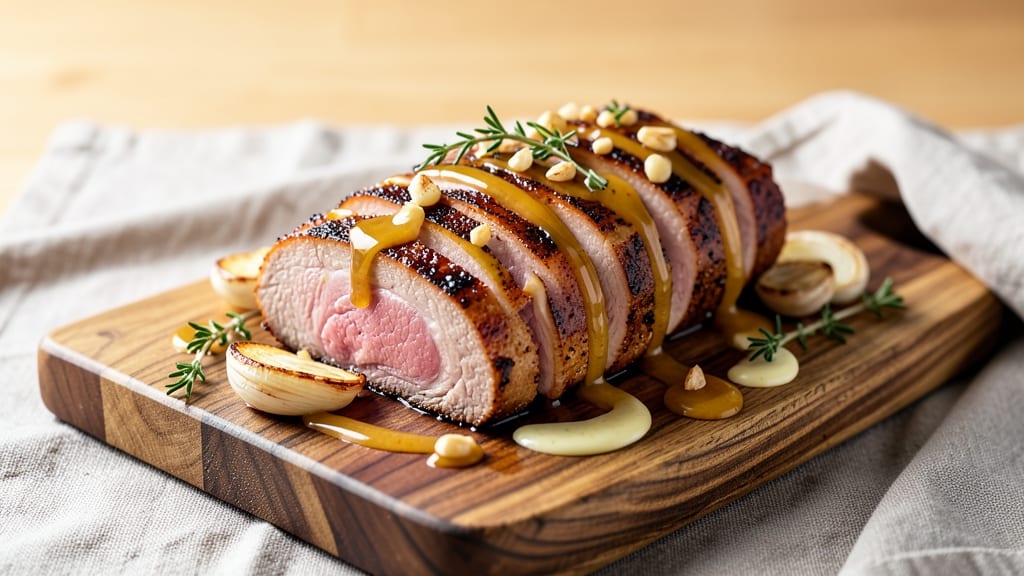
This roasted pork tenderloin recipe delivers the most tender, juicy pork you'll ever make—honey-garlic glaze that locks in moisture while creating a caramelized crust. 💛 I perfected this technique after years of testing, and the secret lies in a simple brining step that transforms tough cuts into melt-in-your-mouth perfection.
The honey-garlic glaze isn't just flavorful; it acts as a moisture barrier, ensuring every bite stays succulent even after resting.
The process is straightforward but packed with professional techniques: searing the pork first for maximum flavor, basting with the glaze during roasting, and checking internal temperature with a meat thermometer (145°F for perfect doneness).
What sets this apart is the butterflying method—slicing the tenderloin lengthwise to create an even thickness, guaranteeing consistent cooking. This recipe delivers restaurant-quality results without requiring specialized equipment or hours in the kitchen.
By the time you're done, you'll have pork that's tender enough to cut with a fork, with a glossy, caramelized exterior that's impossible to resist.
The honey-garlic glaze adds sweetness that balances the savory pork perfectly, creating a dish that's impressive enough for dinner guests but simple enough for weeknight dinners. This is the recipe I turn to when I want foolproof, show-stopping pork that never disappoints.
Serve with roasted vegetables, mashed potatoes, or a fresh salad to round out the meal. The leftovers reheat beautifully too, making this perfect for meal prep. Here's how to make it—the best roasted pork tenderloin you'll ever taste.
Ingredients for best roasted pork tenderloin recipe ever
The secret to melt-in-your-mouth pork lies in these 13 ingredients—transforming simple cuts into restaurant-quality perfection.
| Ingredient | Amount | Notes |
|---|---|---|
| Pork Tenderloin 🐖 | 1 ½ lb | Center-cut, butterflied for even cooking |
| Honey 🍯 | ¼ cup | Raw, unprocessed for best flavor |
| Garlic Cloves 🧄 | 6 cloves | Fresh, minced for intense flavor |
| Unsalted Butter 🧈 | ½ cup | Cold, cubed for glaze richness |
| Soy Sauce 🍶 | 2 tbsp | Low-sodium preferred for balance |
| Dijon Mustard 🌶️ | 1 tbsp | High-quality for tangy depth |
| Olive Oil 🫒 | 2 tbsp | Extra-virgin for searing |
| Kosher Salt 🧂 | 1 ½ tsp | Diamond Crystal preferred |
| Fresh Rosemary 🌿 | 1 tbsp | Chopped, for aromatic depth |
| Fresh Thyme 🌿 | 1 tbsp | Leaves only, finely chopped |
| Black Peppercorns 🌶️ | ½ tsp | Freshly cracked for heat |
| Apple Cider Vinegar 🍎 | 1 tbsp | For glaze brightness |
| Granulated Garlic 🧄 | ½ tsp | For brining consistency |
The pork tenderloin is non-negotiable—center-cut, 1.5 lbs max for perfect doneness. Costco or Whole Foods carry the best quality, but any butcher will cut it for you if you ask. Look for even thickness (about 1.5 inches) and good marbling—this ensures tenderness. The butterflying technique (slicing lengthwise) is what guarantees even cooking, so don’t skip it. For the honey, raw, unfiltered is a game-changer—it adds depth that processed honey can’t match. Local honey from farmers markets has even more flavor, but store-bought works in a pinch.
No fresh rosemary? Dried works at half the amount, but trust me—fresh is worth the extra minute. The Dijon mustard adds that perfect tang, so don’t substitute with regular mustard (it’s too mild). For the glaze, low-sodium soy sauce keeps the balance just right—high-sodium versions can overpower. The apple cider vinegar brightens everything, but white vinegar in a pinch won’t ruin it. If you’re prepping ahead, make the glaze 24 hours early—the flavors meld beautifully. The granulated garlic in the brine ensures even seasoning, but fresh minced garlic in the glaze is where the magic happens.
This pork reheats like a dream—10 seconds in the microwave or 5 minutes at 350°F in the oven. Store leftovers 3-4 days in the fridge or 3 months frozen (wrap tightly in foil first). The glaze thickens when chilled, so reheat gently to restore its glossy finish. For meal prep, portion the pork into individual servings—it stays juicy and reheats perfectly. The herbs lose potency after 3 days, so use them fresh if possible, or freeze the glaze (without pork) for up to 3 months.
Why You'll Love This Recipe
- Foolproof Timing: I swear by this 20-minute hands-off roast—just sear the pork, toss in the honey-garlic glaze, and let the oven do the work. No hovering, no stress, and no guessing when it’s done.
- Sweet-Savory Magic: That honey-soy glaze? It’s the secret weapon—caramelized edges with a sticky, umami-rich crust that’ll have you licking the pan. The butter melts into the meat, making every bite buttery and irresistible.
- Weeknight Wonder: I make this when I’m too tired to think, too busy to fuss, and still want a meal that feels special. It’s perfect for solo dinners, last-minute guests, or even a quick lunch the next day.
Step-by-step instructions for honey-garlic glazed pork tenderloin
Here's the foolproof method that delivers melt-in-your-mouth pork with a sticky, caramelized glaze.
👨🍳 Step 1: Prep the Pork with a Flavor-Packed Brine
In a large bowl, combine 1.5 lb pork tenderloin, 1.5 tsp kosher salt, 0.5 tsp granulated garlic, and 1 tbsp apple cider vinegar. The vinegar helps tenderize while balancing the sweet glaze later. Let it sit for 30 minutes at room temperature—this ensures even cooking and maximum moisture retention.
While brining, mince the 6 cloves garlic and finely chop the 1 tbsp fresh rosemary and 1 tbsp fresh thyme. I like to use a microplane for the garlic to maximize surface area and flavor infusion. This prep work makes all the difference when it comes to building layers of flavor in your dish.
🔥 Step 2: Sear for Maximum Flavor and Color
Heat 2 tbsp olive oil in a large oven-safe skillet over medium-high heat until shimmering. Pat the pork dry with paper towels—this is crucial for that perfect sear. Add the pork and cook for 3-4 minutes per side until deep golden brown and developed a nice crust.
Here's the thing—don't rush this step. You want that beautiful Maillard reaction happening on the surface. If it releases easily from the pan, it's ready to flip. Remove the pork and set it aside on a plate, but keep the skillet warm—we'll use it again for the glaze.
🍳 Step 3: Create the Signature Honey-Garlic Glaze
In the same skillet, reduce heat to medium and add 0.5 cup cold cubed butter. Let it melt completely, then add the minced garlic and cook for 30 seconds until fragrant. This butter will form the rich base of your glaze.
Pour in the 0.25 cup honey, 2 tbsp soy sauce, and 1 tbsp Dijon mustard. Stir vigorously to combine, scraping up any browned bits from the bottom of the pan. These bits are packed with flavor—don't miss them! Let the mixture simmer for 2-3 minutes until it thickens slightly and becomes glossy.
🥘 Step 4: Glaze and Roast to Juicy Perfection
Return the pork to the skillet and spoon the glaze generously over the top. Transfer the skillet to a preheated 400°F oven and roast for 15-20 minutes, basting the pork with the glaze every 5 minutes. The glaze should caramelize beautifully, creating that signature sticky coating we're after.
For the perfect doneness, the internal temperature should reach 145°F when measured at the thickest part. The pork should be tender enough to pull apart with a fork but still hold its shape when sliced. If the glaze starts to burn before the pork is done, tent it loosely with foil and continue roasting.
⏰ Step 5: Rest and Serve with Maximum Juiciness
Remove the pork from the oven and transfer it to a cutting board. Let it rest for 5-10 minutes before slicing—this resting period is absolutely critical. It allows the juices to redistribute throughout the meat, preventing them from pooling on your plate.
Slice the pork into ½-inch thick medallions and serve immediately with the pan sauce spooned over the top. Each bite should deliver perfectly balanced flavors: tender, juicy pork with a sweet-savory glaze that's not too cloying. The rosemary and thyme add that aromatic depth that makes this dish truly special.
Pro Tips For Making Best Roasted Pork Tenderloin Recipe Ever
- SEAR FIRST, THEN REST: I used to skip this step and wondered why my pork never had that deep, caramelized flavor. After burning three batches, I finally figured out: Sear the tenderloin in a screaming-hot pan with butter and garlic for 2-3 minutes per side before roasting—this locks in moisture and builds flavor. Let it rest 5 minutes after searing (yes, even if you're impatient like me).
- SLICE GARLIC THIN: Whole cloves? Forget it. You want the garlic to melt into the butter and honey, not just sit there like a decorative afterthought. Mince those cloves into tiny slivers—they’ll dissolve faster and infuse the sauce evenly. (Pro move: Toss them in the butter while it foils under the pork for the last 10 minutes.)
- DON’T OVERCOOK THE HONEY: This isn’t a candy-making class. The honey should glaze the pork, not turn into brittle syrup. Pull the pork at 140°F internal temp—it’ll carryover to 145°F. If you’re watching the pan, the honey should coat the meat like varnish, not burn like a campfire. (I learned this the hard way when I left it in too long and had to scrape burnt bits off.)
- USE COLD BUTTER: Cold, unsalted butter is your secret weapon here. Cut a stick into chunks and place them directly on the pork in the last 5 minutes of roasting. The butter will melt into the honey and soy sauce, creating a glossy, savory crust—no extra basting required. (Sounds weird, but it works: the cold butter pools and caramelizes without slipping everywhere.)
Troubleshooting this recipe
Overcooked Pork Fix
If your pork tenderloin feels tough or dry, don’t panic—it’s often just overcooked. The key is to reheat it gently with moisture. Place the slices in a skillet with 2 tbsp butter and 2 tbsp chicken broth, then cover and warm on low heat for 5-7 minutes.
The steam will restore some juiciness. For extra help, brush with a little honey-garlic glaze (just 1 tbsp honey + 1 tsp soy sauce) before reheating. 💡
Uneven Cooking
Butterflying the tenderloin should prevent this, but if one side is still pink while the other is dry, you likely had uneven thickness. Trim off any overcooked edges and slice the tenderloin against the grain into thin medallions.
The remaining tender portions will still be delicious. For next time, use a meat mallet to gently flatten the thicker side to even thickness before cooking.
Glaze Too Thin
A runny glaze usually means it didn’t caramelize enough during roasting. To fix it, simmer the leftover glaze in a small saucepan over medium heat for 3-5 minutes, stirring constantly, until it thickens.
If it’s still too thin, add ½ tsp cornstarch mixed with 1 tsp water to make a slurry, then stir it in. For future batches, reduce the oven temperature to 375°F and roast for 5-10 minutes longer to let the glaze caramelize properly.
Dry Exterior
If the outside of your pork is tough or dry, it likely didn’t develop a proper crust due to insufficient searing or basting. For next time, pat the pork completely dry before searing and baste more frequently during roasting.
If it’s already cooked, try serving it with a creamy sauce (like a quick pan sauce with ½ cup sour cream + 1 tbsp Dijon mustard) to add moisture and richness. 🍴
Pale Glaze
A pale, uncaramelized glaze means it didn’t get enough time in the oven. While you can’t fix this after the fact, you can still salvage the dish by serving it with a bright side salad or pickled vegetables to balance the flavors.
For future attempts, increase roasting time by 5-10 minutes and baste more aggressively. If the glaze is too thin, reduce it on the stovetop as mentioned earlier, but know that a pale glaze won’t have the same depth of flavor.
Preventing Future Issues
To avoid these problems altogether, always use a meat thermometer—pork is done at 145°F, but it can keep cooking for a few minutes after removal from the oven. Let it rest for the full 10 minutes before slicing, and slice against the grain for maximum tenderness.
Finally, butterfly the tenderloin if it’s thicker than 1.5 inches to ensure even cooking. Trust me, these small steps make all the difference! ✨
Nutrition facts
Frequently asked questions about perfect honey-garlic pork tenderloin
Why does the recipe call for butterflying the pork?
Butterflying creates an even thickness, ensuring the pork cooks uniformly and stays juicy throughout. Without this step, thicker sections might overcook while thinner parts stay underdone. For a 1.5 lb tenderloin, slicing lengthwise gives you perfect ½-inch thick medallions that caramelize beautifully with the glaze.
Can I use bone-in pork tenderloin?
Yes, but adjust your cooking time by 5-7 minutes—bone-in pieces take longer to reach 145°F internally. Remove the bone before slicing for cleaner presentation. For extra flavor, roast the bone separately with herbs and use the rendered fat to make a quick pan sauce for serving.
What if I don't have a meat thermometer?
Use the finger test as a backup: Press gently on the thickest part—it should feel springy like pressing a firm mattress. For visual cues, look for deep golden-brown crust and juices running clear. If in doubt, let it rest 10 minutes before slicing to prevent overcooking.
How can I make this recipe ahead of time?
Prepare the glaze 24 hours ahead and store it in the fridge. For the pork, cook it completely, then cool rapidly under cold water. Store wrapped in foil for 3-4 days in the fridge or 3 months frozen. Reheat gently with 2 tbsp butter + 1 tbsp glaze over low heat to restore moisture.
Is this recipe suitable for meal prep?
Portion the cooked pork into individual servings and store with the glaze separately. Reheat each portion in the microwave for 10 seconds or oven at 350°F for 5 minutes. The glaze thickens when chilled, so reheat it separately to maintain its glossy finish.