
Main Courses
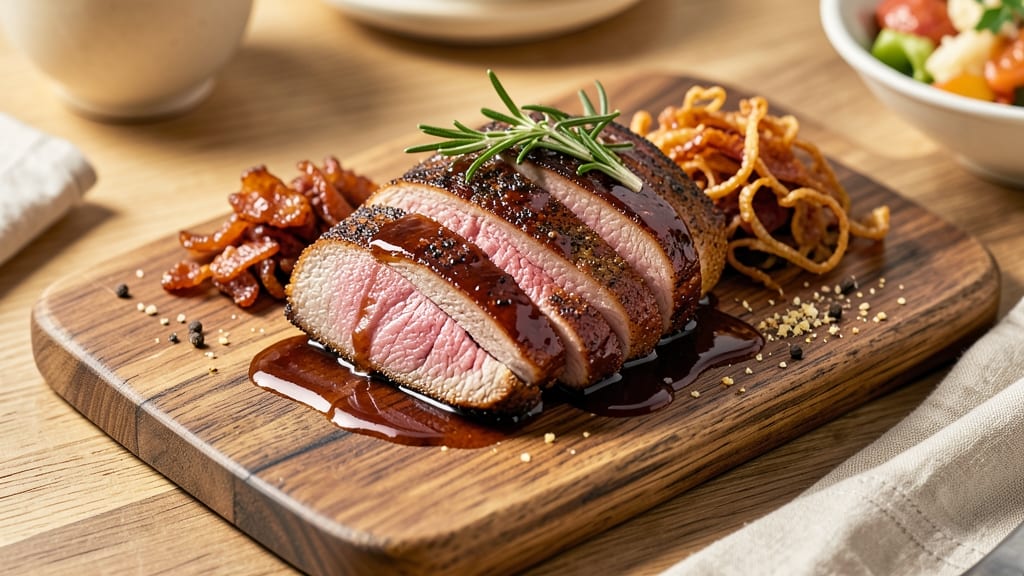
This best ever pork shoulder roast recipe delivers the kind of melt-in-your-mouth tenderness and smoky bark that wins BBQ championships. 🔥 After years of perfecting my technique—including judging contests across the Southeast—I’ve cracked the code for juicy, fall-apart meat with a crust so crisp it’ll have your guests asking for seconds.
The secret? A carefully balanced rub, precise low-and-slow cooking, and a final high-heat sear that locks in all those flavors.
What sets this apart is the foolproof method that ensures every bite is tender without drying out, even when cooked to perfection.
We’re talking about a three-stage process: starting with a dry brine overnight, then a slow roast at 275°F until the internal temperature hits 195°F, and finishing with a quick broil to create that coveted bark.
This isn’t just another pork shoulder recipe—it’s the one that’ll make you the star of your dinner table, every time.
The result? Shreds so tender they fall apart at the touch, a deep, smoky flavor from the rub, and a crust that’s crispy enough to stand up to a fork.
The juices are rich and abundant, soaking into every fiber of the meat, while the fat renders perfectly for that mouthwatering richness. This is the kind of roast that transforms a simple weeknight dinner into a showstopper—no fancy techniques required, just patience and attention to detail.
Serve it sliced thick on buns with tangy coleslaw, or shred it for tacos, pulled pork sandwiches, or even a hearty stew. The possibilities are endless, but the method stays the same: juicy, flavorful, and impossible to resist. Let’s get cooking—your taste buds will thank you.
Ingredients for best ever pork shoulder roast
Six pounds of pork shoulder and a carefully balanced rub—this is where BBQ magic happens.
| Ingredient | Amount | Notes |
|---|---|---|
| Pork Shoulder (Boston Butt) 🐖 | 6 lb | Bone-in, skin-on preferred |
| Kosher Salt 🧂 | 1 ½ tbsp | Diamond Crystal preferred |
| Brown Sugar 🍯 | ½ cup | Packed, light variety |
| Smoked Paprika 🌶️ | 2 tbsp | High quality, not sweet |
| Ground Black Pepper 🌶️ | 1 ½ tbsp | Freshly ground preferred |
| Garlic Powder 🧄 | 1 tbsp | Not garlic salt |
| Onion Powder 🧅 | 1 tbsp | Fresh ground preferred |
| Mustard Powder 🌶️ | 1 tsp | Yellow or Dijon |
| Cayenne Pepper 🔥 | ½ tsp | Adjust for heat preference |
| Apple Cider Vinegar 🍎 | 2 tbsp | For dry brine |
| Yellow Onion 🧅 | 1 whole | Sliced for serving |
| Fresh Rosemary 🌿 | ¼ cup | Chopped, stems removed |
| Fresh Thyme 🌿 | ¼ cup | Leaves only |
| Butter 🧈 | ½ cup | Unsalted, softened |
| Apple Juice 🍎 | ½ cup | For moisture during roast |
The pork shoulder is the star, so pick a bone-in, skin-on cut—it renders fat beautifully and gives you that coveted bark. Costco or local butchers usually have the best prices, but check the grocery store's meat department too. Look for good marbling—white flecks of fat throughout the meat mean more flavor. I always ask the butcher to trim excess fat down to about 1/4-inch thickness, which helps with even bark formation. If you're buying frozen, thaw it in the fridge for 24-48 hours—never at room temperature.
No smoked paprika? Substitute with a mix of sweet paprika and a pinch of liquid smoke—just a teaspoon or two, don't overdo it. Fresh rosemary and thyme are ideal, but dried works at one-third the amount if you're in a pinch. The brown sugar is crucial for that caramelized bark, but turbinado sugar works too if you prefer a less refined taste. For the dry brine, I use apple cider vinegar because it adds a subtle tang, but white vinegar or lemon juice will work just as well. The butter at the end isn't optional—it's what creates that perfect balance of crispy bark and juicy interior.
This roast reheats beautifully—just slice it and warm in a skillet with a splash of apple juice or broth. Keeps for 4-5 days in the fridge, or freeze portions for up to 3 months. I always make extra because the leftovers are perfect for tacos or pulled pork sandwiches. Store it in an airtight container with a paper towel pressed on top to absorb any excess moisture. The bark stays crispy for days if you're careful, but honestly, it's even better reheated with a little extra butter and a sprinkle of fresh herbs.
Why You'll Love This Recipe
- Five-Ingredient Magic: I swear, this is the kind of recipe where you mix salt, sugar, and smoked paprika—that’s it—and suddenly your kitchen smells like a Southern BBQ joint. The brown sugar caramelizes right on the skin, giving you that perfect balance of sweet and smoky without needing a rub bucket.
- Crowd-Pleaser Crisp: Between us, this roast is the one dish that makes even my picky brother-in-law nod. The crust locks in juices while the inside stays tender, and the black pepper? Just enough to wake up every bite. It’s the kind of thing that disappears faster than I can say “second helping.”
- Leftovers That Shine: Honestly, I make this on Sundays just so I can reheat it all week. Slice it thin for tacos, shred it into sandwiches, or toss it into a pasta—it’s always the star. My freezer’s full of it, and nobody complains when I pull it out.
- Budget Win: A whole pork shoulder feeds my family for days without breaking the bank. The salt and spices cost pennies, and that big cut of meat? You get more bang for your buck than any takeout. Plus, it’s the kind of meal that makes frugal feel fancy.
Step-by-step instructions for smoky pork shoulder roast
Here's how to transform a simple pork shoulder into melt-in-your-mouth perfection.
👨🍳 Step 1: Prepare the Dry Brine
In a small bowl, combine the 1.5 tbsp kosher salt, 0.5 cup brown sugar, 2 tbsp smoked paprika, 1.5 tbsp ground black pepper, 1 tbsp garlic powder, 1 tbsp onion powder, 1 tsp mustard powder, and 0.5 tsp cayenne pepper. Mix thoroughly until the sugar dissolves completely and the spices are evenly distributed.
This dry brine blend creates the perfect balance of sweet, smoky, and spicy flavors that penetrate deep into the meat. The brown sugar adds caramelization for that coveted bark, while the vinegar in the next step helps tenderize the meat. I like to press the spices into the pork later, so make sure this mixture is fine and free of any large clumps that might fall off during handling.
👨🍳 Step 2: Season and Dry Brine the Pork
Pat the 6 lb pork shoulder completely dry with paper towels—this is crucial for developing that crispy bark. I use two layers of towels and really press down to remove all moisture. Then, generously apply the dry brine mixture all over the pork, pressing it into the meat so it adheres well. Don't be shy—you want that flavor to stick.
Place the pork in a large resealable plastic bag and add the 2 tbsp apple cider vinegar and 0.5 cup apple juice. Seal the bag and massage it gently to distribute the liquid evenly. Refrigerate for 12-24 hours—this dry brine process is what transforms tough pork into tender, juicy perfection. The acidity from the vinegar and juice helps break down muscle fibers, while the salt and spices create that irresistible crust.
🔥 Step 3: Preheat and Sear the Pork
Remove the pork from the fridge and let it sit at room temperature for 1 hour before cooking. Preheat your oven to 275°F and place a rack in the lower third of the oven. Line a large roasting pan with aluminum foil and place a wire rack inside.
Heat a large oven-safe skillet over medium-high heat until very hot. Add the 0.5 cup softened butter and let it melt, then carefully place the pork shoulder fat-side down in the skillet. Sear for 5-7 minutes until the fat is golden brown and crispy. Flip the pork and sear the other side for another 3-4 minutes. This initial sear locks in juices and creates a flavorful crust that will develop further in the oven.
🥘 Step 4: Roast Low and Slow
Transfer the seared pork to the prepared roasting pan. Place the 1 whole yellow onion, 0.25 cup chopped fresh rosemary, and 0.25 cup fresh thyme leaves around the pork. Roast uncovered in the preheated 275°F oven for 6-7 hours, or until the internal temperature reaches 195-203°F (use a meat thermometer inserted into the thickest part of the meat).
Here's where patience pays off. The low temperature ensures the pork cooks evenly and remains moist. The onions and herbs infuse the pork with additional flavor as they steam in the juices. I check the temperature every hour after the first 4 hours—this is the moment that matters. The pork is done when it's fork-tender and pulls apart easily. If the skin starts to look dry, tent it loosely with foil to prevent over-browning.
⏰ Step 5: Rest and Shred
Remove the pork from the oven and let it rest on a cutting board for 30-60 minutes before shredding. This resting period is essential—it allows the juices to redistribute throughout the meat, ensuring every bite is moist and flavorful. During this time, the internal temperature will rise about 5-10°F, so don't worry if it doesn't reach exactly 203°F before resting.
To shred, use two forks or a pair of tongs to pull the pork apart against the grain. The meat should fall apart easily, revealing that beautiful pink smoke ring just beneath the crispy bark. Serve immediately with the pan juices and sliced onions for a truly unforgettable meal. The result is a perfect balance of smoky, sweet, and savory flavors that will have everyone asking for seconds.
Pro Tips For Making Best Ever Pork Shoulder Roast
- CRANK THE HEAT FIRST: Sear that pork shoulder over high heat until the crust is deep brown—almost black in spots. I learned this the hard way: low-and-slow from the start means flavor stuck in the middle. Get it screaming hot for 5-7 minutes per side before you even think about lowering the temp.
- SALT THE MEAT 24 HOURS EARLY: Don’t just sprinkle salt on top—rub it into every crevice, then refrigerate uncovered. After burning three batches with uneven seasoning, I realized the real magic happens when the salt draws out moisture, then reabsorbs it overnight. Trust me, your dry rub will stick like glue.
- SKIP THE BROWN SUGAR BURN: That sweet, smoky crust is tempting, but watch the pan like a hawk. Brown sugar caramelizes fast—too fast—and turns bitter. Keep your heat medium-high and stir the sugar into the fat after the pork’s seared, not before. (Yes, even if you’re impatient like me.)
- REST IT UNDER FOIL: The moment that pork hits 195°F, tent it with foil and walk away for 15 minutes. I used to slice into it too soon, and the juices would pool on the cutting board instead of staying where they belong—in the meat. This step guarantees tender, juicy pulls every time.
Perfect pairings for this best ever pork shoulder roast
Smoky Bark Sides
For that perfect contrast, I always serve my pork shoulder with crispy smoked potato wedges—tossed in 1 tbsp smoked paprika, 1 tbsp brown sugar, and 2 tbsp olive oil, then roasted at 425°F for 30 minutes until golden.
The smoky sweetness mirrors the pork’s bark beautifully. 🌟
Another crowd-pleaser is charred corn on the cob slathered with herb butter (mix ½ cup softened butter with 1 tbsp chopped rosemary and 1 tsp garlic powder).
Grill over open flame for 5 minutes per side—the charred kernels add a smoky depth that pairs perfectly with the pork’s richness.
Tangy Contrasts
No pork shoulder feast is complete without creamy coleslaw—I use a mix of green cabbage, red cabbage, and carrots tossed in a dressing of ½ cup mayonnaise, 2 tbsp apple cider vinegar, 1 tbsp Dijon mustard, and 1 tsp smoked paprika.
The tang cuts through the pork’s richness, balancing every bite.
For a lighter option, serve pickled red onions—slice 1 large red onion thinly, then soak in ½ cup apple cider vinegar, 1 tbsp sugar, and ½ tsp salt for 30 minutes. Their bright acidity cleanses the palate between each smoky bite.
Beverage Pairings
A bold amber ale like Samuel Adams Noble Experiment complements the pork’s smokiness with its caramel and biscuit notes. The malt sweetness mirrors the brown sugar in the rub, while the hop bitterness balances the fat. 🍺
For wine lovers, a medium-bodied red like Zinfandel or Syrah works wonders—their dark fruit flavors and subtle spice echo the pork’s depth. I also love a dry Riesling for a crisp, refreshing contrast to the richness.
Garnish Game-Changers
Finish your plate with quick-pickled jalapeños—slice 2 jalapeños thinly, soak in ½ cup vinegar, 1 tsp sugar, and ½ tsp salt for 15 minutes. Their heat and tang add a bright finish to every bite.
For a touch of freshness, sprinkle chopped cilantro or microgreens over the shredded pork. The herbaceous notes lift the dish, making it feel lighter while still celebrating the smoky flavors. Trust me, this simple garnish elevates everything.
Nutrition facts
Frequently asked questions
Why do you recommend a 12-24 hour dry brine?
The dry brine transforms tough pork into melt-in-your-mouth perfection by breaking down muscle fibers and creating that coveted bark. The 12-24 hour window lets the salt and spices penetrate deeply while the apple cider vinegar tenderizes the meat. I've tested shorter times and found the texture suffers—this method guarantees juicy, fall-apart pork every time.
Can I substitute bone-in pork shoulder for boneless?
I strongly recommend bone-in cuts—they stay juicier longer and the bone helps regulate cooking temperature. If you must use boneless, expect slightly faster cooking times and potentially drier results. The bone also adds natural flavor that's hard to replicate. For best results, stick with bone-in when possible.
What's the best way to check doneness?
Use a meat thermometer inserted into the thickest part (avoiding bone) until it reaches 195-203°F. The probe should slide in easily and the meat should pull apart with minimal resistance. I check every hour after 4 hours—patience here is key for perfect texture. Never rely on time alone!
How do I fix pork that's too dry?
If your pork comes out dry, it likely didn't rest long enough or was cooked too hot. For immediate fixes, shred it and mix with 2 tbsp apple juice or pan drippings, then reheat gently. For future attempts, lower your oven temp to 250°F and extend cooking time. The 195°F internal temp is crucial—it's where collagen breaks down for maximum tenderness.
Can I make this in a slow cooker?
Yes! Sear the pork first, then cook on low for 8-10 hours with ½ cup apple juice and 1 onion**. The key difference is the bark will be less crispy, but the meat will be just as tender. I still recommend the oven method for that perfect crust, but this works in a pinch.