
Main Courses
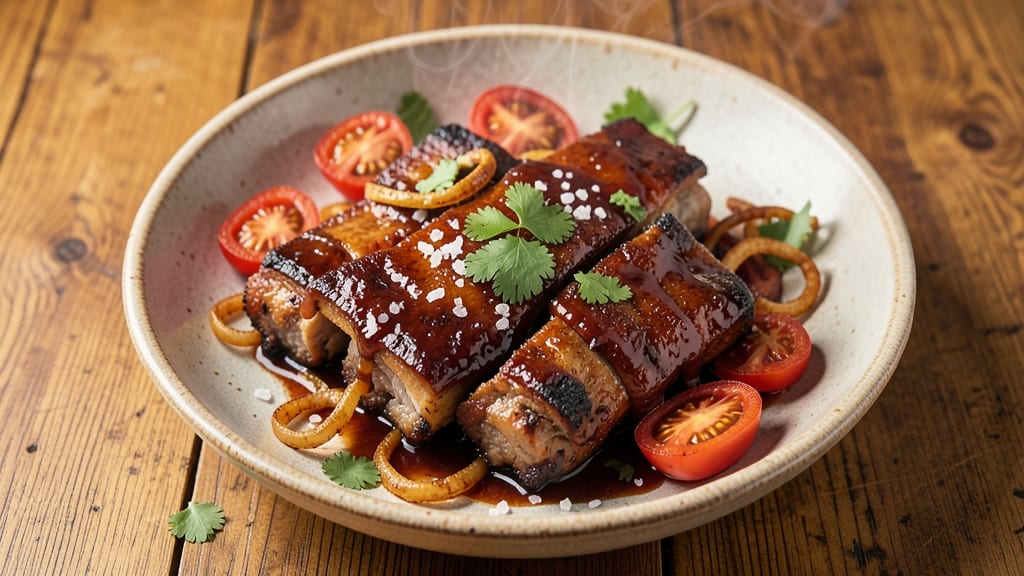
Barbecue pork short ribs transform tough cuts into melt-in-your-mouth perfection with that coveted smoky bark and tender core. I’ve been perfecting this recipe since my first backyard cookout—where the hickory smoke first hooked me for life. The secret lies in patience: slow-cooking breaks down collagen while building deep, caramelized flavor in the rub.
What sets this recipe apart is the balance of traditional pitmaster techniques with modern shortcuts. You’ll start with a bold dry rub of smoked paprika, brown sugar, and cayenne, then braise the ribs until they’re so tender they practically fall apart.
The key is maintaining 225°F heat—whether in a smoker, oven, or even a slow cooker—so the meat cooks evenly without drying out.
By the time you’re done, you’ll have ribs that are crisp on the outside, velvety on the inside, and packed with that unmistakable smoky-sweet aroma. The bark should crackle when you press it, and the meat should pull apart at the slightest touch.
This is the kind of dish that turns weeknight dinners into memorable feasts—no fancy plating required.
Serve with classic sides like creamy coleslaw or buttery cornbread to soak up every last drop of that rich barbecue sauce. The leftovers? Even better the next day. Let’s get cooking—your ribs are waiting.
Ingredients for barbecue pork short ribs
Fourteen ingredients to transform tough ribs into smoky, tender perfection.
| Ingredient | Amount | Notes |
|---|---|---|
| Pork Short Ribs 🥩 | 3 lb | Bone-in, 1-1.5 inches thick |
| Smoked Paprika 🌶️ | ½ cup | High-quality for smoky depth |
| Brown Sugar 🍚 | ¼ cup | Light or dark variety |
| Cayenne Pepper 🔥 | 1 tsp | Adjust for heat preference |
| Kosher Salt 🧂 | 2 tbsp | Diamond Crystal preferred |
| Black Pepper 🌶️ | 1 tbsp | Freshly ground for best flavor |
| Garlic Powder 🧄 | 1 tbsp | Freshly ground preferred |
| Onion Powder 🧅 | 1 tbsp | For depth of flavor |
| Apple Cider Vinegar 🍎 | ¼ cup | For tenderizing and tang |
| Beef Broth 🍲 | 1 ½ cups | Low-sodium preferred |
| Honey 🍯 | 2 tbsp | For glossy bark |
| Yellow Onion 🧅 | 1 whole | Chopped for braising liquid |
| Fresh Rosemary 🌿 | ¼ cup | Chopped, for aroma |
| Hickory Wood Chips 🌳 | 1 package | For authentic smoky flavor |
The ribs are the star—look for bone-in cuts with good marbling at Costco or your local butcher. Freshly cut ribs cook more evenly, but pre-cut works too (just trim excess fat). The rub ingredients matter: Penzeys smoked paprika adds real depth, and brown sugar caramelizes beautifully during cooking. For the vinegar, Bragg's is my go-to—cheap and effective. If you're using a smoker, soak the wood chips in water for 30 minutes before lighting to control smoke output.
No smoked paprika? Substitute 1 tbsp regular paprika plus 1 tsp liquid smoke. Running short on time? Pre-mix the dry rub and store it in a jar for up to 3 months. The beef broth can be swapped for chicken broth (though it'll be slightly lighter). For extra tenderness, add 1 tsp baking soda to the braising liquid—it breaks down collagen faster (rinse the ribs thoroughly after cooking). The honey can be omitted if you're watching sugar, but it's what gives those ribs that glossy bark. If you're cooking in the oven, wrap the ribs in foil after the first hour to speed up the process.
The ribs keep best in the fridge for 4 days, but they're even better reheated. Wrap them tightly in foil and reheat in a 300°F oven for 20 minutes. For leftovers, portion into containers with some of the braising liquid—it reheats beautifully. The dry rub? Store it in an airtight container for up to 6 months. If you've got extra, freeze it in ice cube trays for easy single-use portions. The wood chips can be reused once or twice before they burn too fast—just soak them again before each use.
Why You'll Love This Recipe
- One-Pan Magic: I swear by this—just ribs, spices, and a slow cook. No flipping, no fussing, no extra pots to scrub. That smoky paprika and brown sugar caramelize right on the sheet pan while I sip my coffee.
- Sweet Heat Payoff: Between us, the cayenne and smoked paprika combo is chef’s kiss—deep, smoky, with just enough kick to wake you up. The brown sugar melts into a glossy glaze that clings like a hug, and that crispy edge? Worth every second.
- Tailgate or Tuesday: Serve these with crusty bread for a game-day crowd or toss them in tacos for a lazy night in. My kids even eat them cold the next day—proof they’re that good. Honestly, they’re my secret weapon for any gathering.
Step-by-step instructions for smoky pork short ribs
Here's how to transform tough ribs into melt-in-your-mouth perfection with a perfect bark.
Prepare the Dry Rub and Season the Ribs
In a medium bowl, combine the 0.5 cup smoked paprika, 0.25 cup brown sugar, 1 tsp cayenne pepper, 2 tbsp kosher salt, 1 tbsp black pepper, 1 tbsp garlic powder, and 1 tbsp onion powder. Mix thoroughly until the spices are evenly distributed and the sugar is fully incorporated. This dry blend is the flavor foundation that will create that irresistible smoky bark.
Pat the 3 lb pork short ribs completely dry with paper towels—this is crucial for that crispy exterior. Then generously coat each rib with the dry rub, pressing it into the meat so it adheres well. Place the seasoned ribs on a wire rack set over a baking sheet and refrigerate uncovered for at least 2 hours (or up to 12 hours for deeper flavor penetration). The longer they sit, the more flavorful they'll become.
Set Up the Smoker and Cook Low and Slow
Preheat your smoker to 225°F using the 1 package hickory wood chips. Once the smoke is clean and steady (no thick white smoke), place the seasoned ribs bone-side down in the smoker. This positioning helps render fat and develop that coveted bark. Close the lid and resist the urge to peek—every time you open it, you lose heat and extend cooking time.
Cook the ribs for 3 hours, then flip them bone-side up. This gives the other side exposure to the smoke and heat. Continue smoking for another 3 hours, until the internal temperature reaches 195°F and the meat is fork-tender. You'll know they're ready when the connective tissue breaks down and the meat pulls apart easily. This low-and-slow approach is what transforms tough meat into tender, juicy perfection.
Build the Braising Liquid and Finish Cooking
While the ribs smoke, prepare the braising liquid by combining the 1 whole yellow onion (chopped), 0.25 cup fresh rosemary, 0.25 cup apple cider vinegar, 1.5 cups beef broth, and 2 tbsp honey in a saucepan. Bring to a simmer over medium heat for 10 minutes, then strain out the solids. This aromatic liquid will infuse the ribs with even more flavor during the final cooking stage.
Once the ribs reach 195°F, transfer them to a Dutch oven or heavy oven-safe pot. Pour the braising liquid over the ribs, ensuring they're fully submerged. Cover and transfer to a preheated 325°F oven for 1.5 hours. This braising step ensures the ribs are fork-tender and infused with the rich, tangy flavors of the liquid. The ribs should be fall-apart tender by the end of this time.
Rest and Serve with Confidence
Remove the ribs from the oven and let them rest for 10-15 minutes before serving. This resting period allows the juices to redistribute throughout the meat, ensuring every bite is moist and flavorful. Discard any excess braising liquid or reserve it for sauces or gravies if desired.
Slice the ribs between the bones and serve with the remaining braising liquid spooned over the top. Each bite should deliver a perfect balance of smoky, sweet, and tangy flavors with a tender, melt-in-your-mouth texture. These ribs are perfect for feeding a crowd or enjoying as a centerpiece for your next barbecue gathering.
Pro Tips For Making Barbecue Pork Short Ribs
- Trim the Fat First: Pork short ribs come with a thick fat cap—slice that off before cooking. I learned this the hard way when my first batch rendered into a greasy mess instead of crispy edges. Use a sharp knife to shave it down to 1/4-inch; the ribs will sear better and the sauce won’t turn into soup.
- Brown in Batches: Don’t crowd the pan. I used to toss all the ribs in at once, and they just steamed instead of developing that deep, caramelized crust. Work in two batches over medium-high heat—give them 3-4 minutes per side until golden. That’s when the smoky paprika flavor really sticks.
- Salt the Ribs Overnight: Skip the last-minute salting. Toss the ribs with 1-2 teaspoons of kosher salt per pound and let them sit in the fridge for 12-24 hours. My grandmother swore by this, and she was right: the salt breaks down the muscle fibers, making them tender and letting the smoked paprika cling like glue.
- Deglaze with Vinegar: After browning, splash in 1/4 cup apple cider vinegar instead of just water or broth. The acid cuts through the fat and brightens the brown sugar’s caramelization—plus, it balances the cayenne’s heat. I was skeptical until I tried it; now I never go back.
Make-ahead tips for leftovers
Prep Ahead
Start by mixing the dry rub ingredients in a bowl and storing it in an airtight container for up to 6 months. This saves time and ensures consistent flavor every cook.
I like to pre-mix mine in small batches—I keep one in my pantry and another in my smoker toolbox for camping trips. 🌶️
Pat the ribs dry and apply the rub 1-2 days ahead of cooking. Store them uncovered on a wire rack in the fridge. This dry-brining process enhances tenderness and flavor development. The longer they sit, the better they get—just don’t exceed 48 hours or the meat may dry out slightly.
Smoker Prep
Set up your smoker the night before if possible. Soak the hickory wood chips in water for 30 minutes and store them in a sealed container in the fridge. This keeps them ready to go when you are.
I always preheat my smoker to 225°F at least 30 minutes before cooking to ensure stable temperature right from the start.
If you’re using a charcoal smoker, prepare your charcoal and wood chips ahead of time. I like to use a chimney starter for even heat distribution. Arrange the coals in a circle, place the wood chips on top, and let them smoke for 15 minutes before adding the ribs.
This creates that perfect smoke ring without overpowering the meat.
Braising Liquid
Prepare the braising liquid a day ahead and store it in the fridge. Combine all ingredients in a saucepan, simmer for 10 minutes, then strain and refrigerate. The flavors meld beautifully overnight, and you’ll save time on cook day.
I like to add a splash of apple cider vinegar for tang and a touch of honey for that glossy finish.
For extra convenience, freeze the braising liquid in ice cube trays. Thaw what you need the morning of cooking. This works especially well if you’re making multiple batches of ribs—just multiply the recipe and freeze the extras. The liquid reheats beautifully when needed.
Storage Solutions
Cooked ribs store exceptionally well for 4 days in the fridge. Wrap them tightly in heavy-duty foil or place them in an airtight container with some of the braising liquid.
This keeps them moist and flavorful. For longer storage, freeze the ribs for up to 3 months. Portion them into individual servings for easy reheating.
When reheating, wrap the ribs in foil and bake at 300°F for 20 minutes or until warmed through. Add a splash of water or broth if the ribs seem dry. I always reheat mine in the oven because it maintains that perfect texture—no sad, rubbery ribs here! 🔥
Nutrition facts
Frequently asked questions
Can I make these ribs in an oven instead of a smoker?
Preheat your oven to 225°F and place the seasoned ribs on a wire rack over a baking sheet. Cook for 4 hours, then flip and continue for another 2 hours until fork-tender. For extra smokiness, add 1 tbsp liquid smoke to the braising liquid or wrap the ribs in foil with soaked wood chips during the last hour. The texture will be just as tender—it's all about that low-and-slow magic!
How do I know when the ribs are done?
Use a meat thermometer to check the internal temperature—pork short ribs are perfect at 195°F. The meat should pull apart easily with a fork, and the connective tissue should have broken down completely. If you're unsure, cut between the bones: if it's fork-tender, they're ready! Pro tip: The bark should be dark and crackly, not pale or sticky.
What if I don't have a smoker or oven?
No problem! A slow cooker works beautifully. Place the ribs in the slow cooker, add the braising liquid, and cook on low for 8 hours or high for 5 hours. For a stovetop method, sear the ribs first, then cover with the braising liquid and simmer on low heat for 3-4 hours. The key is patience—low heat is your friend for tender results.
Can I use bone-in or boneless pork short ribs?
This recipe is designed for bone-in ribs because the bones add incredible flavor to the braising liquid. However, if you only have boneless, reduce the cooking time by 30-45 minutes (they cook faster without bones). The texture will still be tender, though the sauce won't be as rich. For best results, stick with bone-in cuts—they're worth the extra effort!
How spicy should the ribs be?
The cayenne pepper adds heat, but you can adjust it to your taste. For mild ribs, reduce the cayenne to ½ tsp or omit it entirely. If you love heat, add an extra ½ tsp or sprinkle extra cayenne on top after cooking. The honey and apple cider vinegar balance the spice beautifully, so don't worry—there's no risk of overwhelming heat!