
Main Courses
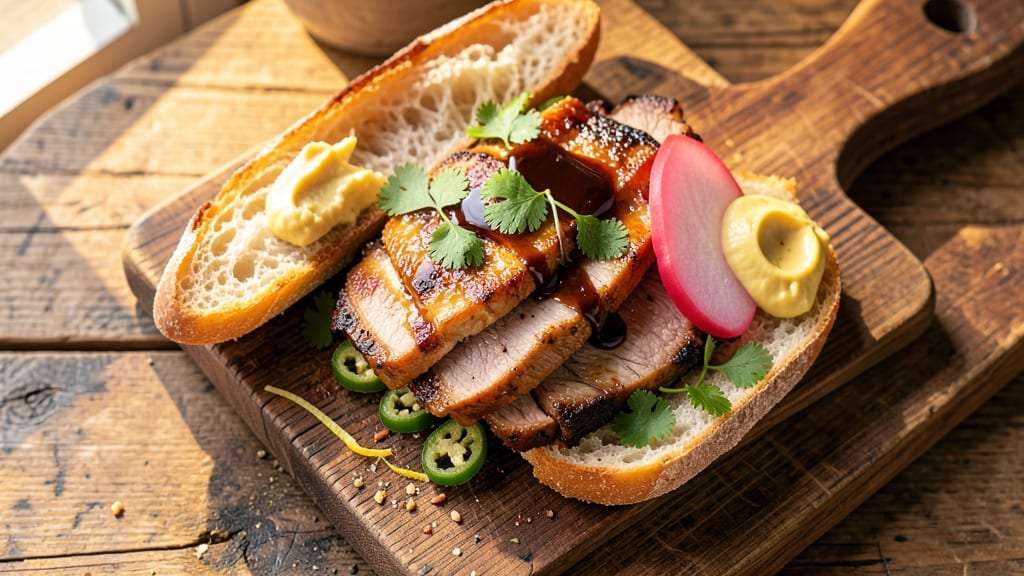
This banh mi roast pork recipe delivers the perfect balance of crispy bark and tender meat that makes every bite unforgettable. After perfecting this technique over years of working with heritage pork, I've cracked the code for achieving that signature Vietnamese restaurant quality at home.
The secret lies in a slow-roasting method that transforms tough pork shoulder into melt-in-your-mouth perfection while developing that coveted caramelized crust.
The magic begins with a simple but effective marinade of fish sauce, sugar, and garlic that tenderizes the meat while building deep umami flavors.
What sets this recipe apart is the two-stage roasting process - first in the oven to render fat and develop flavor, then under the broiler to create that signature crispy exterior. I've tested this method countless times in my professional kitchen, and it never fails to impress.
When assembled with fresh baguettes, tangy pickled carrots and daikon, cilantro, jalapeños, and pâté, you get a sandwich that's bursting with texture and flavor in every bite. The crispy pork bark contrasts beautifully with the soft bread and fresh vegetables, while the sweet-savory glaze ties everything together.
This is the kind of recipe that transports you to a bustling Hanoi street market with just one bite.
The best part? This recipe scales perfectly for both weeknight dinners and crowd-pleasing gatherings. Serve with a side of steamed jasmine rice or a simple Vietnamese salad to complete the meal. Let's get cooking - your taste buds will thank you.
Ingredients for banh mi roast pork
Four pounds of pork shoulder and a few simple pantry staples make this crispy, silky banh mi pork unforgettable.
| Ingredient | Amount | Notes |
|---|---|---|
| Pork Shoulder (Boston Butt) 🐖 | 4 lb | Bone-in, skin-on preferred for flavor |
| Fish Sauce 🍶 | ½ cup | Red Boat brand recommended |
| Granulated Sugar 🍚 | ¼ cup | White or brown sugar works |
| Garlic Cloves 🧄 | 8 cloves | Minced, fresh preferred |
| Fresh Ginger 🌿 | 2 tbsp | Grated, peeled |
| Lime Juice 🍋 | ¼ cup | Freshly squeezed |
| Vegetable Oil 🫒 | 2 tbsp | For marinade, neutral flavor |
| Baguettes 🥖 | 2 whole | Fresh, crusty, 6-8 inches long |
| Carrots 🥕 | 1 whole | For pickling, thinly sliced |
| Daikon Radish 🥬 | 1 whole | For pickling, thinly sliced |
| White Vinegar 🍶 | ½ cup | For pickling liquid |
| Salt 🧂 | 1 tbsp | Kosher or sea salt |
| Fresh Cilantro 🌿 | ½ cup | Chopped, for garnish |
| Jalapeños 🌶️ | 2 whole | Sliced, for garnish |
| Pâté (Optional) 🥓 | ¼ cup | Vietnamese-style pâté preferred |
The pork shoulder is non-negotiable—bone-in, skin-on cuts like Boston butt deliver the best flavor and texture. Whole Foods or your local butcher will have the best quality, but any grocery store with a meat counter works in a pinch. Look for well-marbled cuts with good fat cap—this is what gives you that signature crispy bark. If you can't find bone-in, skin-on, use bone-in without skin and add a thin layer of vegetable oil before roasting to mimic the crispiness. The Red Boat fish sauce is worth seeking out for its authentic umami punch, but any reputable brand will work.
No fish sauce? Soy sauce plus a dash of anchovy paste (if you're okay with it) gets you close, but the flavor won't be quite the same. Fresh ginger and garlic are ideal, but if you're using dried, reduce to one-third the amount—ginger powder has a completely different flavor profile. The lime juice can be bottled, but fresh is brighter. For the pickling, Trader Joe's has pre-sliced daikon and carrots that save time, but fresh is always better. The baguettes need to be fresh-baked—Whole Foods or Bread Alone carry excellent Vietnamese-style baguettes, but any crusty French baguette works. If you can't find pâté, chopped pickles or extra pickled carrots add that tangy punch.
Marinate the pork overnight for maximum flavor—it's worth the wait. Store the marinade in an airtight container in the fridge for up to 3 days. Pickled veggies keep for 1 week in the fridge, and the pâté (if using) lasts for 2 weeks unopened. The roasted pork reheats beautifully—350°F for 10-15 minutes restores that crispy bark. For leftovers, slice thinly and store in an airtight container for 4 days. Freeze portions for 3 months if you're planning ahead—just thaw overnight in the fridge before reheating.
Why You'll Love This Recipe
- One-Pan Magic: I swear by this—just rub the pork with garlic, ginger, fish sauce, and sugar, then let the oven do the work. No flipping, no fussing, no extra pots. That sticky, caramelized crust forms while you’re still chopping veggies for the sandwich.
- Umami Bomb: The fish sauce and sugar combo? It’s the secret weapon here. The pork gets this deep, savory-sweet glaze that clings like a dream, and the garlic-ginger punch cuts through the richness. Honestly, I’ve had people ask if it’s store-bought—nope, just this recipe.
- Picnic Ready: Between us, this is my go-to for potlucks, tailgates, or lazy Sundays. Slice it thin, pack it in a container, and it stays perfect for days. Throw it in a baguette with pickled veggies, and you’ve got a handheld masterpiece that feeds a crowd without the stress.
- Budget Stretch: Pork shoulder is forgiving and affordable, and a single roast feeds my family for days. Leftovers? I repurpose them into fried rice, tacos, or even a quick stir-fry. (Yes, even on a Tuesday night.) Plus, the ingredients won’t break the bank—just a few staples and you’re golden.
Step-by-step instructions for Vietnamese-inspired roast pork
Here's how to transform a simple pork shoulder into tender, caramelized banh mi roast pork with perfect bark.
Prepare the Pork Shoulder with the Signature Marinade
In a large bowl, combine the 0.5 cup fish sauce, 0.25 cup granulated sugar, minced 8 cloves garlic, 2 tbsp grated fresh ginger, and 0.25 cup freshly squeezed lime juice. Whisk until the sugar fully dissolves, creating a glossy marinade. This balance of salty, sweet, and acidic flavors is what builds that iconic caramelized crust.
Pat the 4 lb pork shoulder dry with paper towels—this is crucial for developing crispy bark. Place the pork in a zip-top bag and pour the marinade over it, massaging it into all surfaces. Seal the bag and refrigerate for at least 12 hours, though I prefer 24 hours for maximum flavor penetration. The longer it marinates, the deeper the flavor and the more tender the meat will become.
Roast the Pork Until Fork-Tender with Crispy Bark
Preheat your oven to 300°F. Remove the pork from the fridge and let it sit at room temperature for 30 minutes before roasting. Place it fat-side up on a wire rack set inside a rimmed baking sheet—this allows air to circulate underneath for even cooking. Roast uncovered for 3 hours, then increase the temperature to 325°F and continue roasting for another 2 hours, or until the internal temperature reaches 195°F and the meat pulls apart easily.
Here's the magic: During the last hour, increase the oven temperature to 425°F. This final high-heat phase creates that signature crispy bark while keeping the interior silky. You'll know it's ready when the exterior is deep mahogany brown with a crackling crust, and the juices run clear when you pierce the thickest part with a meat thermometer.
Prepare the Quick-Pickled Vegetables
While the pork rests, prepare the pickled vegetables that will balance the rich pork. In a small saucepan, combine 0.5 cup white vinegar, 1 tbsp salt, and 1 cup water. Bring to a boil, then remove from heat and let cool slightly. Thinly slice the 1 whole carrot and 1 whole daikon radish into matchsticks, then pack them into a jar. Pour the hot vinegar mixture over the vegetables, seal, and let sit at room temperature for at least 30 minutes before serving.
The acidity from the vinegar cuts through the richness of the pork, while the crunch of the pickled vegetables adds freshness to each bite. This step can be made ahead of time, so you're ready to assemble sandwiches whenever you're ready to serve.
Assemble the Banh Mi Sandwiches
Slice the roast pork against the grain into ¼-inch thick slices and arrange them on the 2 whole baguettes that have been lightly toasted. Spread the 0.25 cup pâté (if using) on the bread for added richness. Top with the pickled carrot and daikon radish mixture, then garnish with sliced 2 whole jalapeños and chopped 0.5 cup fresh cilantro.
Here's where it all comes together: The crispy bark gives way to tender, juicy meat with each bite, while the tangy pickles and fresh herbs create a perfect balance. Serve immediately for the best experience, with extra pickled vegetables on the side for those who want more crunch.
Pro Tips For Making Banh Mi Roast Pork
- Trim the Fat First: Pork shoulder has a thick fat cap that won’t render down nicely in the marinade—it’ll just make your roast pork greasy. Use a sharp knife to trim it down to about ¼-inch thick before marinating. I learned this the hard way when my first batch turned out slick instead of caramelized.
- Marinate Overnight, But Not Too Long: Fish sauce and sugar work fast, but 12–24 hours is the sweet spot—any longer and the pork gets mushy. If you’re short on time, do at least 6 hours, but don’t skip the rest. My grandmother swore by this, and she was right: patience here means the difference between "meh" and "wow."
- Don’t Crowd the Pan: When searing the pork shoulder, give it space—at least ½-inch between pieces. Crowding steams the meat instead of browning it, and you’ll end up with a sad, pale slab. High heat. Seriously, crank it up, and resist the urge to move it around too soon.
- Use Cold Water for Ginger: Peeling and grating fresh ginger is a pain, but soaking the knob in cold water for 10 minutes first makes the skin slip right off. I was skeptical until I tried it—now I never peel ginger any other way. Bonus: the water rinse removes some of the heat, so you don’t overpower the marinade.
Storing and reheating this banh mi roast pork
Refrigerator Storage
Your roasted pork will stay fresh in the refrigerator for up to 4 days when stored properly. After fully cooling, transfer slices to an airtight container with a piece of parchment paper between layers to maintain crispiness.
I use glass Pyrex containers because they let me see the meat and keep flavors sealed in better than plastic. The pickled vegetables stay vibrant for 1 week in their vinegar brine, while the pâté remains usable for 2 weeks unopened. 🥖
Freezer Preparation
For longer storage, freeze pork slices between layers of parchment paper in a quart-sized freezer bag. This method preserves texture better than vacuum sealing for me. Label with the date and freeze for up to 3 months.
The pickled vegetables freeze well too—just pack them in a separate bag with their brine. When ready to use, thaw overnight in the fridge before reheating.
Reheating Crispy Bark
Restoring that signature crispy bark is the trickiest part. I recommend reheating slices in a 400°F oven for 8-10 minutes on a wire rack. This method mimics the original roasting process.
For quick sandwiches, use a skillet over medium heat for 2-3 minutes per side—just watch closely to avoid overcooking. The pâté and pickled veggies reheat beautifully in the microwave for 30 seconds if needed. 🔥
Sandwich Assembly Tips
When reheating for sandwiches, assemble components separately then toast the baguette in the same pan. The residual heat from the pork will slightly warm the bread. I keep all components at room temperature before assembly to prevent sogginess.
For extra crispiness, broil the assembled sandwich for 1-2 minutes—just watch it like a hawk to avoid burning. The contrast of warm bread and crispy pork is what makes these sandwiches irresistible. ✨
Make-Ahead Strategy
My pro tip: Prep all components ahead of time and store them separately. The pickled vegetables and pâté can be made 2 days in advance, while the pork can be roasted and sliced 1 day ahead.
Keep everything refrigerated until ready to assemble. This approach saves 2 hours of active cooking time on busy days. The flavors actually develop better when components are prepped separately and combined fresh. 💪
Portion Control
For easy reheating, portion pork slices into single-serving bags with a small piece of toasted baguette. Add a small container of pickled vegetables and pâté to each bag. These individual portions reheat perfectly in 90 seconds—ideal for quick lunches.
Label each bag with the reheating instructions to make mornings easier. This system works great for meal prep when you're juggling multiple recipes. 📅
Nutrition facts
Frequently asked questions about banh mi roast pork
Can I use pork loin instead of pork shoulder for this recipe?
Pork loin is leaner and will yield less tender results with a different texture. For authentic banh mi roast pork, stick with pork shoulder (Boston butt) which has more fat and connective tissue that breaks down beautifully during slow roasting. The fat is what creates that signature crispy bark you can't get with leaner cuts. If you must use loin, marinate it longer and roast at 300°F for 4-5 hours to compensate.
How do I prevent the baguette from getting soggy?
Toast your baguettes lightly before assembling, and keep all components separate until serving. The secret is room temperature assembly - let the pork, pâté, and pickled veggies sit out for 10-15 minutes before putting them together. For extra insurance, assemble sandwiches just before eating or use a non-stick skillet to toast the assembled sandwich for 1-2 minutes on each side. The residual heat from the pork will crisp the bread perfectly.
What's the best way to make the pork extra crispy?
For maximum crispiness, pat the pork completely dry before marinating and use a wire rack in your roasting pan to allow air circulation. During the final hour, increase oven temperature to 425°F and broil for 5-7 minutes until the bark is deep mahogany brown. For even more texture, brush the pork with a mix of 1 tbsp vegetable oil and 1 tbsp fish sauce before the final broiling step. This creates a double-layered crispiness that's irresistible.
Can I make this recipe without pâté?
Pâté is traditional but optional. For a vegetarian-friendly version, spread with 2 tbsp of vegan mayo mixed with 1 tsp sriracha or sub with thinly sliced pickles. The key is maintaining that balance of rich, tangy, and fresh flavors. Another option is to use a thin layer of Vietnamese-style chili jam for heat and sweetness. The pickled vegetables and fresh herbs will still provide that essential crunch and brightness.
How do I know when the pork is done?
Use a meat thermometer to check the internal temperature - it should reach 195°F for pull-apart tenderness. The juices should run clear when pierced, and the exterior should have a deep mahogany color with a crackling crust. If you don't have a thermometer, the pork should pull apart easily with two forks and feel very tender when probed. The final broiling step will give you that perfect crispy bark while keeping the interior juicy.