
Main Courses
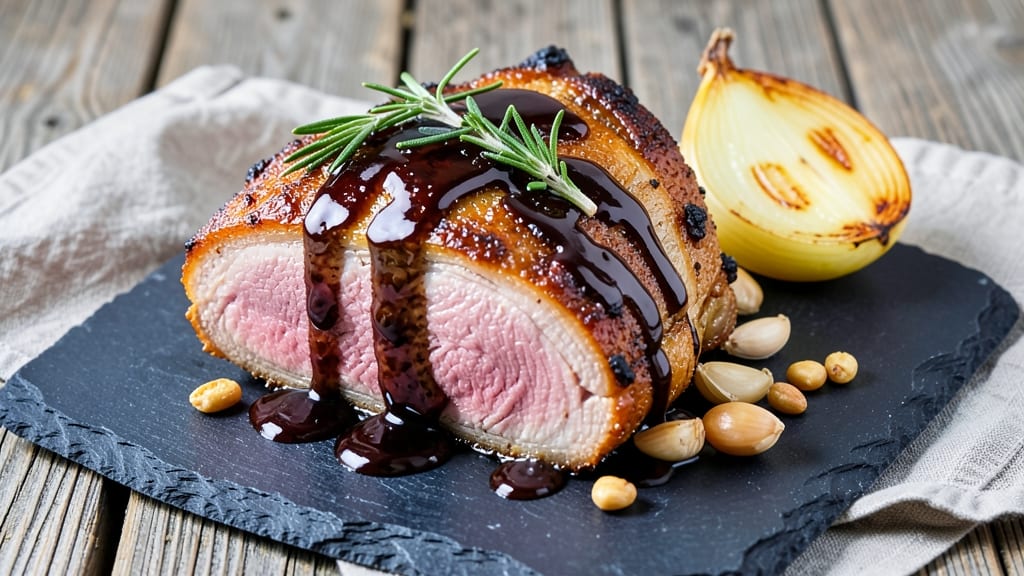
This balsamic pork roast recipe transforms a simple cut of pork into melt-in-your-mouth perfection with just a few hours in the oven. 🔥 The secret lies in slow-braising the meat until it practically falls apart, then finishing it with a rich balsamic reduction that balances sweetness and acidity—just like my grandmother used to make back in Georgia.
That first bite of tender pork, glistening with glaze, is what keeps me coming back to this dish year after year.
The beauty of this recipe is its simplicity—no fancy techniques, just a well-seasoned pork roast that cooks low and slow until it’s fork-tender. The balsamic glaze isn’t just for show; it cuts through the richness of the pork while adding depth that turns a weeknight meal into something special.
I’ve perfected this method over years of cooking for crowds, and it never fails to impress, even when using a modest cut of pork shoulder.
What you’ll end up with is a restaurant-quality roast that’s juicy, flavorful, and effortlessly impressive. The pork stays moist and tender, while the balsamic glaze caramelizes into a sticky, aromatic sauce that ties everything together.
This isn’t just a recipe—it’s a technique that elevates simple ingredients into something extraordinary, and it’s the kind of dish that makes your kitchen smell like home.
Pair it with roasted root vegetables or a crisp green salad, and you’ve got a complete meal that’s perfect for holidays or a cozy Sunday dinner. The best part? Leftovers reheat beautifully, so you’ll have flavorful pork for days. Let’s get cooking—this roast is worth every minute of wait time.
Ingredients for balsamic pork roast
Six ingredients transform humble pork into restaurant-quality melt-in-your-mouth perfection.
| Ingredient | Amount | Notes |
|---|---|---|
| Pork Shoulder (Bone-In) 🍖 | 4 lb | Well-marbled, cut into 2-inch chunks |
| Balsamic Vinegar 🍷 | 1 cup | Aged 25 years minimum for depth |
| Olive Oil 🫒 | ¼ cup | Extra-virgin, fruity variety |
| Yellow Onion 🧅 | 1 whole | Large, roughly chopped |
| Garlic Cloves 🧄 | 6 cloves | Peeled, smashed for aroma |
| Fresh Rosemary 🌿 | ¼ cup | Needles only, finely chopped |
| Fresh Thyme 🌿 | ¼ cup | Leaves only, stems removed |
| Dried Oregano 🍃 | 1 tbsp | Mediterranean blend preferred |
| Ground Black Pepper 🌶️ | 1 ½ tsp | Freshly cracked for intensity |
| Kosher Salt 🧂 | 1 ½ tbsp | Diamond Crystal preferred |
| Granulated Sugar 🍚 | 1 tbsp | Light brown preferred for caramel |
| Beef Broth 🥄 | 1 ½ cups | Low-sodium, homemade or high-quality |
| Carrots 🥕 | 2 whole | Large, peeled and chunked |
| Celery Stalks 🥬 | 2 whole | Stringy parts trimmed |
| Apple Cider Vinegar 🍎 | 1 tbsp | For brightness in glaze |
Pork shoulder is the star here—bone-in with good marbling gives the best flavor and texture. Costco or local butchers usually carry the best cuts, but any grocery store with a meat counter will have it. Look for pieces that feel firm but yield slightly when pressed—that's your marbling. If you can't find bone-in, bone-out works too, but it'll dry out faster. The fresh herbs? Trader Joe's has the best selection at reasonable prices, but any grocery store's produce section will do. Just make sure the rosemary needles are bright green and the thyme leaves are vibrant, not brown or wilted.
No aged balsamic vinegar? Substitute 3/4 cup regular balsamic plus 1 tbsp honey—it won't be as complex, but it'll work. Fresh rosemary is ideal, but dried at 1/4 the amount gets you close. The beef broth can be swapped for vegetable broth if you're vegetarian, but the flavor will be subtly different. For the glaze, if you don't have apple cider vinegar, lemon juice works too. The carrots and celery are just for flavor—they disappear into the sauce, so no need to fuss over their quality. Just make sure they're fresh; wilted veggies mean watery broth.
This roast tastes even better the next day—3-4 days in the fridge is ideal. For longer storage, freeze portions for up to 3 months. I always make extra because it reheats beautifully. Store in an airtight container with some of the glaze spooned on top—keeps it moist and flavorful. The glaze can be made ahead and reheated separately if you prefer your pork extra tender. Leftovers make great sandwiches or tacos—just warm everything through gently. The glaze thickens when chilled, so thin it with a splash of water or broth when reheating.
Why You'll Love This Recipe
- One-Pan Magic: I swear by this—just sear the pork, toss in onions and garlic, pour on the balsamic, and let the oven do the work. No chopping boards, no extra pots, no stress. The bone-in shoulder stays juicy while the onions caramelize right in the same pan. Honestly, it’s the kind of recipe that makes me want to cook more often.
- Sweet-Savory Magic: That balsamic glaze? It’s where the real charm happens. The deep, tangy sweetness cuts through the richness of the pork, and when it reduces into a glossy syrup, it coats every bite. Between us, the crispy edges on the bone-in cut are chef’s kiss—like a cross between pulled pork and a fancy roast.
- Leftover Goldmine: This isn’t just a one-meal wonder. The pork practically begs to be repurposed—shred it for sandwiches, dice it into pasta, or toss it into a grain bowl the next day. I’ve even used the leftover glaze to drizzle over roasted veggies. Not the prettiest, but the taste makes up for it every time.
- Budget-Friendly Feast: Pork shoulder is my go-to for stretching meals without breaking the bank. A single roast feeds my family of four for two nights, and the balsamic adds luxury for pennies. Plus, the onions and garlic are pantry staples—no fancy ingredients, just pure, satisfying flavor that won’t drain your wallet. (Yes, even on a Tuesday night.)
Step-by-step instructions for balsamic pork roast
Transform tough pork shoulder into melt-in-your-mouth perfection with this slow-braising method.
🔥 Step 1: Sear the Pork Shoulder for Depth of Flavor
Heat 0.25 cup olive oil in a heavy Dutch oven over medium-high heat until shimmering. Pat the 4 lb pork shoulder (bone-in) dry with paper towels—this ensures maximum browning. Working in batches if needed, sear the pork on all sides until deeply golden brown, about 8-10 minutes total. You'll see the fat render out and the meat develop a rich crust.
Here's the thing—don't rush this step. The sear locks in juices and builds that foundational flavor that carries through the entire braise. If your pan gets too crowded, reduce heat slightly to prevent steaming instead of searing. Transfer the seared pork to a plate and set aside.
👨🍳 Step 2: Build the Aromatic Base with Vegetables and Herbs
In the same Dutch oven, add 1 whole yellow onion (roughly chopped), 2 whole carrots (peeled and chunked), and 2 whole celery stalks (trimmed and cut into large pieces). Cook for 5-6 minutes until the vegetables begin to soften and the onions turn translucent. This creates the flavor foundation called mirepoix.
Add 6 cloves garlic cloves (smashed), 0.25 cup fresh rosemary (chopped needles), 0.25 cup fresh thyme (leaves only), 1 tbsp dried oregano, 1.5 tsp ground black pepper, and 1.5 tbsp kosher salt. Stir everything together and cook for another 1 minute until fragrant. The herbs should release their essential oils, filling your kitchen with an intoxicating aroma.
🍳 Step 3: Deglaze and Create the Braising Liquid
Pour in 1 cup balsamic vinegar and scrape up all those delicious browned bits from the bottom of the pan with a wooden spoon. This deglazing step captures all the meaty flavor that would otherwise go down the drain. Add 1.5 cups beef broth and 1 tbsp granulated sugar, then bring the mixture to a gentle simmer over medium heat.
Return the seared pork shoulder to the Dutch oven, along with any accumulated juices. The liquid should come about halfway up the sides of the pork. If it's too shallow, add a splash of water. The goal is to create a moist environment that will gently cook the meat through without drying it out.
⏰ Step 4: Slow-Braise Until Fork-Tender
Cover the Dutch oven with a tight-fitting lid and transfer it to a preheated 300°F oven. Here's where patience pays off—braise the pork for 3-4 hours until it's fork-tender. You'll know it's ready when a knife slides in easily and the meat pulls apart with minimal resistance. The internal temperature should reach 195-205°F.
I like to check the pork after 2.5 hours to make sure there's enough liquid. If it's evaporated significantly, add ½ cup water or broth to maintain moisture. The slow cooking process breaks down connective tissue, transforming tough muscle fibers into silky, melt-in-your-mouth texture.
🥘 Step 5: Finish with Balsamic Glaze and Rest
Remove the pork from the oven and transfer it to a cutting board. Strain the braising liquid through a fine-mesh sieve into a saucepan and return it to medium heat. Add 1 tbsp apple cider vinegar and simmer for 5-7 minutes until slightly thickened. This creates a glossy, tangy glaze that will elevate your dish.
Let the pork rest for at least 15 minutes before slicing—this crucial step allows the juices to redistribute throughout the meat. Skipping this will result in dry slices. Once rested, slice against the grain into ¼-inch thick pieces and serve with the balsamic glaze spooned generously over the top. The result is a restaurant-quality pork roast with perfect tenderness and complex flavor.
Pro Tips For Making Balsamic Pork Roast
- SEAR THE SKIN FIRST: After patting the pork shoulder bone-side down on the cutting board (yes, even if it’s wet), hit it with a smoking-hot pan for 3-4 minutes per side before adding onions and garlic. I learned this the hard way—skipping the sear means the balsamic glaze turns into a sad, thin sauce instead of a sticky, caramelized crust. Use enough olive oil (about 2 tablespoons) so the fat renders properly.
- DEGLAZE WITH PATIENCE: Once the pork is in the oven, don’t rush the deglazing. After browning the onions and garlic, pour in the balsamic vinegar gradually—start with half, let it bubble for 2 minutes, then add the rest. The slow reduction builds depth of flavor, and you’ll end up with a sauce that’s actually worth serving, not just a watered-down drizzle. (Yes, even if you’re impatient like me.)
- COVER IT MIDWAY: The first 90 minutes at 325°F (165°C) should be uncovered to let the skin crisp, but after that, tent the pork loosely with foil. This traps steam without turning the balsamic into a sticky mess—your future self will thank you. I used to leave it uncovered the whole time, and the meat ended up dry, no matter how much I basted.
- USE A THICK CUT OF ONION: Skip the pre-sliced onion rings and grab a whole yellow onion, cut into 1-inch chunks. They’ll caramelize slower, sweeter, and won’t turn to mush under the pork. Pro move: Toss the chunks in a pinch of salt before adding them to the pan. Sounds weird, but it works—your balsamic sauce will taste richer, and the onions won’t just disappear into the fat.
Perfect pairings for these flavors
Classic Side Dishes
Roasted root vegetables—like carrots, parsnips, and sweet potatoes—absolutely shine with this pork roast. Toss them in 2 tbsp olive oil, 1 tsp smoked paprika, and a pinch of salt, then roast at 400°F for 30-35 minutes until caramelized.
The earthy sweetness contrasts beautifully with the tangy balsamic glaze. 🥕
A crisp green salad with arugula, shaved fennel, and pear slices> cuts through the richness. Toss with 1 tbsp aged balsamic and ½ cup toasted walnuts> for crunch. The acidity from the vinaigrette balances the pork's richness perfectly.
Bread Pairings
Warm, crusty sourdough bread> is my go-to for soaking up that glorious balsamic glaze. Toast it in the oven until golden, then rub with a garlic clove> and drizzle with extra-virgin olive oil>. The chewy texture contrasts wonderfully with the tender pork.
For something heartier, try garlic mashed potatoes> with a splash of whole milk and 1 tbsp butter>. The creaminess pairs beautifully with the pork's savory depth. I like to finish them with a sprinkle of fresh parsley> for brightness.
Wine Pairings
A medium-bodied Chianti Classico> from Tuscany is my top choice—its bright acidity and cherry notes complement the balsamic's tang. Look for a 2018-2020 vintage> with 12-14% ABV> for the perfect balance.
If you prefer red blends, a Zinfandel> from California offers juicy blackberry flavors that stand up to the pork. For white wine lovers, a dry Riesling> with its crisp acidity and hint of citrus cuts through the richness beautifully. 🍷
Unexpected Twists
Swap the traditional balsamic glaze for a spiced apple compote>—simmer 2 apples, 1 tsp cinnamon, and 1 tbsp brown sugar> until thick. The sweet-tart contrast is unexpected but magical.
For a smoky twist, add ½ cup BBQ sauce> to the braising liquid. The deep, smoky flavors from Sweet Baby Ray's> or Stubb's> create a Southern-inspired fusion that's hard to resist.
Nutrition facts
Frequently asked questions
Can I use a different cut of pork instead of shoulder?
For best results, use bone-in pork ribs (3-4 hours at 300°F) or pork loin (reduce cooking time to 2-2.5 hours as it's leaner). Bone-in cuts stay juicier, while boneless may dry out faster. Never use pork tenderloin—it's too delicate for this method.
How do I know when the pork is fully cooked?
Use a meat thermometer to check the internal temperature—it should reach 195-205°F for pull-apart tenderness. The meat should also separate easily with two forks. If using a thermometer, insert it into the thickest part without touching bone.
What if my balsamic glaze isn't thick enough?
Simmer the strained braising liquid uncovered for 5-10 extra minutes to reduce it further. For instant thickening, mix 1 tbsp cornstarch with 2 tbsp water, stir into the glaze, and cook until it reaches your desired consistency. A glossy, spoonable sauce is ideal.
Can I make this in a slow cooker instead of oven?
Yes! Brown the pork first, then transfer everything to a slow cooker and cook on Low for 8 hours or High for 5-6 hours. Finish with the balsamic glaze on the stovetop. The texture will be slightly different but still delicious. Just check liquid levels halfway through.
Why does my pork turn out dry sometimes?
This usually happens from overcooking or not resting properly. Keep the oven temperature at 300°F and never exceed 205°F internal temp. Always let the pork rest 15+ minutes before slicing—this redistributes juices. For extra moisture, add ½ cup broth if the pan seems dry during cooking.