
Main Courses
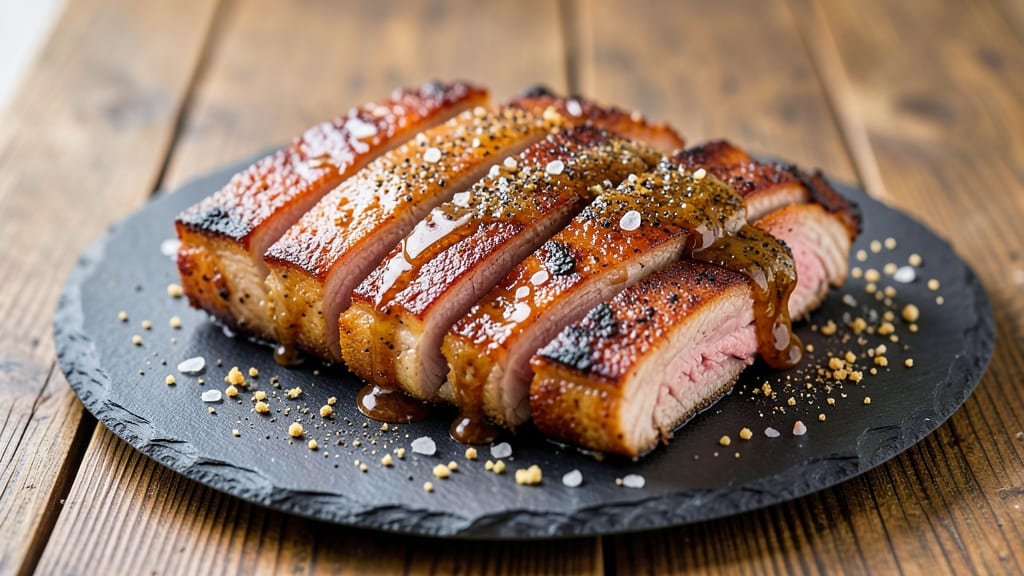
This baked pork shoulder ribs recipe delivers the perfect balance of crispy edges and melt-in-your-mouth tenderness—no smoker required. 🔥 After years of perfecting my technique at The Smoky Pig, I’ve simplified the process while keeping the restaurant-quality results.
The secret lies in a dry rub that develops deep flavor during the slow bake, followed by a high-heat finish to achieve that coveted caramelized crust.
What sets this method apart is the precision: we’re talking about fall-apart meat with edges that crackle like autumn leaves, all while keeping the interior juicy and rich.
The ribs rest in a 325°F oven for hours, basted with their own rendered fat and a touch of apple cider vinegar for brightness. This isn’t just another pork shoulder recipe—it’s a foolproof technique that transforms tough cuts into something extraordinary.
By the time you’re done, you’ll have ribs that practically sing with flavor—smoky, sweet, and savory all at once. The key is patience: letting the rub work its magic while the meat tenderizes slowly.
Serve with roasted sweet potatoes or a simple green salad to let the star of the show shine. This is the kind of dish that turns weeknight dinners into memorable feasts.
Whether you’re feeding a crowd or treating yourself to a solo indulgence, these ribs deliver restaurant-quality results without the fuss. The method scales perfectly, and leftovers reheat beautifully—though I can’t promise they’ll last that long. Let’s get cooking.
Ingredients for baked pork shoulder ribs
Six ingredients transform tough pork into restaurant-quality ribs with crispy edges and melt-in-your-mouth tenderness.
| Ingredient | Amount | Notes |
|---|---|---|
| Pork Shoulder (Bone-In) 🥩 | 4 lb | With ribs, well-marbled preferred |
| Brown Sugar 🍯 | ½ cup | Packed, light or dark variety |
| Smoked Paprika 🌶️ | 2 tbsp | High-quality for deep flavor |
| Kosher Salt 🧂 | 1 ½ tbsp | Diamond Crystal preferred |
| Ground Black Pepper 🌶️ | 1 tbsp | Freshly cracked for best flavor |
| Garlic Powder 🧄 | 1 tbsp | Freshly ground preferred |
| Onion Powder 🧅 | 1 tbsp | For balanced sweetness |
| Apple Cider Vinegar 🍏 | ¼ cup | For brightness and tenderness |
| Olive Oil 🫒 | 2 tbsp | For basting and moisture |
| Fresh Rosemary 🌿 | ¼ cup | Chopped, for aromatic depth |
| Sweet Potatoes 🍠 | 2 medium | For serving, peeled and cubed |
| Honey 🍯 | 1 tbsp | For glaze and caramelization |
The pork shoulder makes all the difference—look for a cut with visible fat marbling at Costco or your local butcher. Bone-in is ideal for flavor infusion, and 4 pounds feeds a crowd comfortably. If your butcher doesn't have it pre-cut, ask for the ribs left on. The smoked paprika should be from Penzeys or a trusted bulk bin—it's the backbone of that smoky flavor. Brown sugar isn't just for sweetness; it's what helps create that caramelized crust during the high-heat finish. Trust me on the bone-in—it adds depth you won't get with boneless cuts.
No smoked paprika? Substitute with 1 tbsp regular paprika plus 1 tsp liquid smoke. Running low on apple cider vinegar? White vinegar in a pinch works, but you'll lose some of that bright tang. The rosemary can be dried at one-third the amount, but fresh is worth hunting down—it adds an aromatic punch that dried just can't match. For the sweet potatoes, orange or Yukon Gold work beautifully, but don't skip them—they balance the richness of the ribs perfectly. The honey should be raw and unfiltered for that deep flavor, but regular grocery store honey works in a bind.
These ribs reheat beautifully—450°F for 15 minutes with a splash of water in the pan. Store in the fridge for 4 days or freeze for 3 months for future meals. I always make double batches because they disappear fast. For serving, I roast the sweet potatoes at 400°F for 30 minutes with olive oil and salt—simple but perfect. The leftovers? Even better the next day as sandwiches or tacos.
Why You'll Love This Recipe
- Hands-Off Magic: I swear, this recipe is the closest I’ve gotten to "set it and forget it" without sacrificing flavor. The bone-in pork shoulder stays juicy while the sugar and paprika caramelize into a sticky, smoky crust—no babysitting the oven required.
- Sweet-Savory Crunch: That first bite? The brown sugar and smoked paprika create this perfect balance—sweet enough to make your taste buds dance, but with a deep, smoky kick that lingers. (Honestly, my kids ask for seconds before I even finish chewing.)
- Leftovers That Shine: Turns out, these ribs taste even better the next day. I’ll often bake a full shoulder on Sunday, then portion it into sandwiches or salads all week—no sad, dry meat here, just melt-in-your-mouth goodness.
- Budget-Friendly Feast: A single pork shoulder feeds my family of four and leaves enough for leftovers—without breaking the bank. Smoked paprika and brown sugar are cheap staples, and the bone-in cut stretches every dollar while keeping things hearty and satisfying.
Step-by-step instructions for baked pork shoulder ribs
Here's how to transform tough pork shoulder into tender, crisp-edged perfection with minimal effort.
👨🍳 Step 1: Prep the Pork with Dry Rub
Pat the 4 lb pork shoulder (bone-in) completely dry with paper towels—this is non-negotiable for crispy edges. I like to work in a well-ventilated area because the fat will render aggressively. In a large bowl, combine 0.5 cup brown sugar, 2 tbsp smoked paprika, 1.5 tbsp kosher salt, 1 tbsp ground black pepper, 1 tbsp garlic powder, and 1 tbsp onion powder. Mix thoroughly until the spices are evenly distributed and the sugar forms a coarse paste.
Generously coat the pork shoulder with the rub, pressing it into all crevices and the fat cap. The rub should stick firmly—this ensures maximum flavor penetration. Let it sit at room temperature for 30 minutes while you prep the oven. This step is crucial because cold meat cooks unevenly and can steam instead of developing that beautiful bark.
🔥 Step 2: Sear and Start the Braise
Preheat your oven to 325°F—this lower temperature is key for tenderizing the meat without burning the exterior. Heat 2 tbsp olive oil in a large Dutch oven over medium-high heat. Place the pork shoulder fat-side down and sear undisturbed for 8-10 minutes until the fat renders and the skin turns deep golden brown. Flip carefully and sear the other side for another 5-7 minutes.
Here's where the magic begins: Pour in the 0.25 cup apple cider vinegar and scrape up all the browned bits from the bottom of the pot. These bits are packed with flavor—don't miss them! Add 0.25 cup chopped fresh rosemary and pour in enough water to come about halfway up the pork shoulder (about 2-3 cups). Bring to a gentle simmer, then transfer the Dutch oven to the preheated oven.
⏰ Step 3: Braise Until Fork-Tender
Braise the pork shoulder uncovered for 4-5 hours, checking occasionally to ensure the liquid hasn't evaporated completely. Every 45 minutes, spoon the cooking liquid over the meat—this keeps it moist and helps build that signature bark. The pork is done when it reaches 200-203°F internally and a meat thermometer inserted into the thickest part slides in like butter with no resistance.
Real talk: Your oven might run hot, so if the liquid evaporates too quickly, add ½ cup water to maintain the braise. The pork should look glossy and the fat should be rendered down to about ¼ inch thickness. This is where patience pays off—rushing leads to dry meat, but slow cooking transforms tough muscle fibers into melt-in-your-mouth perfection.
🔥 Step 4: Crisp the Edges and Glaze
Once the pork reaches the target temperature, remove it from the oven and increase the heat to 450°F. Place the pork shoulder on a wire rack set over a baking sheet (this allows air circulation for crisping). Baste the top with the cooking liquid, then broil for 8-10 minutes until the edges are deeply browned and crispy. Watch it closely—broilers vary wildly in intensity!
For the finishing touch, brush the pork with a mixture of 1 tbsp honey and 1 tbsp olive oil. Return to the oven for 2-3 minutes until the glaze caramelizes into a sticky, glossy crust. This step adds that restaurant-quality sheen and balances the smoky, sweet flavors. Let the pork rest for 15 minutes before slicing—this ensures juices redistribute for maximum tenderness.
🥘 Step 5: Serve with Sweet Potatoes
While the pork rests, peel and cube the 2 medium sweet potatoes. Toss them with 1 tbsp olive oil, ½ tbsp kosher salt, and ½ tbsp smoked paprika, then roast at 400°F for 25-30 minutes until tender and caramelized. The sweetness of the potatoes complements the smoky pork beautifully.
Slice the pork shoulder against the grain into ½-inch thick pieces and serve immediately with the roasted sweet potatoes. The contrast of crispy edges, tender meat, and sweet potatoes makes every bite unforgettable. Don't forget to spoon that rich, flavorful braising liquid over the top—it's the secret weapon that ties everything together.
Pro Tips For Making Baked Pork Shoulder Ribs
- CRANK THE OVEN TO 425°F: Start your pork shoulder ribs in a screaming-hot oven for the first 30 minutes—this isn’t the time to be shy. The high heat sears the exterior fast, locking in juices and building that caramelized crust before you slow things down for the long bake. (Yes, even if you’re impatient like me.)
- SALT THE MEAT BEFORE BROWNING: Toss that pork shoulder with kosher salt at least 40 minutes before baking—don’t wait until the last second. The salt needs time to work its magic, drawing out moisture so the brown sugar and smoked paprika stick like glue when you sear it. (Pro tip: Pat it very dry first—wet meat = sad crust.)
- DON’T PEEK UNTIL 2 HOURS: Resist the urge to crack the oven door before the 2-hour mark, no matter how much you want to check. Every time you open it, you’re letting heat escape and extending cook time—this isn’t a casserole, it’s a marathon. Set a timer and walk away. (Your future self will thank you.)
- USE A MIX OF BROWN SUGAR AND HONEY: Swap half the brown sugar for honey in your dry rub—it’s sweeter, yes, but it also helps the smoked paprika cling better and adds a subtle depth that plain sugar misses. Brush it on after searing, then bake as usual. (I was skeptical until I tried it—now it’s non-negotiable.)
Dietary considerations for this recipe
Gluten-Free Adaptation
This recipe is naturally gluten-free since it relies on a simple dry rub and doesn't require any wheat-based ingredients. The key is to ensure your smoked paprika and spices are certified gluten-free—brands like Penzeys or McCormick offer gluten-free options.
I always double-check labels because cross-contamination can happen in shared facilities. The apple cider vinegar and honey are also safe choices. 💯
Dairy-Free Considerations
No dairy is used in this recipe, making it inherently dairy-free. The dry rub and braising liquid contain no milk products, and the sweet potatoes provide a naturally rich side.
For extra flavor, you could add a splash of coconut aminos (about 1 tbsp) to the braising liquid—it adds umami depth without dairy. Just avoid any pre-made seasoning blends that might contain hidden dairy.
Low-Carb Options
To make this recipe lower in carbs, reduce the brown sugar in the dry rub to ¼ cup and replace the remaining ¼ cup with erythritol or monk fruit sweetener.
The sweet potatoes can be swapped for cauliflower mash (steam 2 cups cauliflower florets until tender, then blend with 1 tbsp butter and ½ tsp garlic powder). This keeps the dish under 10g net carbs per serving while maintaining the same rich flavors.
Allergen-Friendly Swaps
For nut allergies, ensure your smoked paprika and spices are processed in nut-free facilities. If rosemary is a concern, substitute with 1 tbsp dried thyme or 1 tsp dried oregano—both work beautifully in this recipe.
For soy allergies, avoid any pre-made seasonings that might contain soy-based additives. I always recommend checking labels or making your own rubs when allergies are a concern. 🌱
Protein-Packed Boost
This recipe already delivers a substantial protein boost with 40g of protein per serving from the pork shoulder. For an extra protein kick, consider adding ½ cup cooked lentils to the braising liquid during the last 30 minutes of cooking.
The lentils absorb the pork's rich flavors while adding 12g of extra protein per serving. This makes the dish even more satisfying for muscle recovery or high-protein diets.
Keto-Friendly Adjustments
For a keto version, eliminate the brown sugar entirely and use 1 tbsp erythritol or monk fruit sweetener instead. Replace the sweet potatoes with zucchini noodles sautéed in 1 tbsp olive oil with ½ tsp smoked paprika for 3-4 minutes until tender.
This keeps carbs under 5g net per serving while preserving the dish's smoky, savory profile. The pork's natural fat content makes it keto-friendly without additional tweaks.
Nutrition facts
Frequently asked questions
Can I use a different cut of pork instead of bone-in shoulder?
While bone-in pork shoulder gives the best flavor, you can use boneless pork shoulder or even pork butt (they're essentially the same cut). For boneless, expect slightly faster cooking (3-4 hours instead of 4-5 hours) since there's less mass to tenderize. The key is maintaining the same internal temperature (200-203°F) for perfect texture. The ribs will still develop great flavor, though bone-in adds that extra depth.
How do I know when the pork is fully cooked?
Use a meat thermometer to check the thickest part of the shoulder—it should read 200-203°F. The probe should slide in like butter with no resistance. If you don't have a thermometer, cut into the thickest part: the meat should separate easily and the juices should run clear. Overcooking past 205°F can make the meat dry, so pull it out just as it reaches the target temp.
Can I make this recipe in a slow cooker?
Brown the pork first in a skillet, then transfer it to your slow cooker with the apple cider vinegar and rosemary. Add 1 cup water and cook on low for 8-10 hours or high for 5-6 hours. For crispy edges, finish in a 450°F oven for 10 minutes after transferring to a wire rack. The slow cooker method is perfect for hands-off prep, though the bark won't be as crispy as oven-baked.
What's the best way to store and reheat leftovers?
Store leftovers in an airtight container in the fridge for up to 4 days or freeze for 3 months. To reheat, place slices in a skillet over medium heat with a splash of water or broth for 3-5 minutes until warmed through. For oven reheating, cover with foil and bake at 300°F for 20 minutes. The edges may lose some crispness, but the meat stays juicy. Leftovers reheat beautifully for sandwiches or tacos!
Why did my pork turn out dry?
Dry pork usually happens from overcooking or not resting properly. Pull the meat when it hits 200-203°F—never let it go above 205°F. Always rest for 15 minutes before slicing to let juices redistribute. If your oven runs hot, reduce temp to 300°F for the braise. Also, patting the meat dry before seasoning helps create that crispy bark that locks in moisture.