
Main Courses
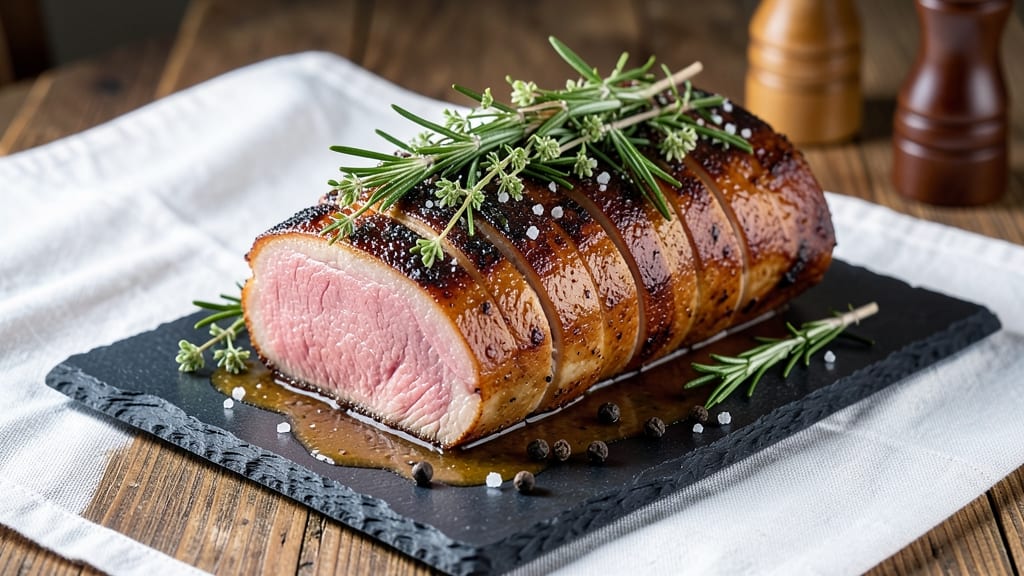
This baked pork loin roast recipe transforms a simple weeknight dinner into a restaurant-worthy centerpiece—no fuss, no stress, just hermetically sealed juiciness that keeps every bite tender and flavorful.
After years of perfecting pork at Atlanta’s The Smoky Pig, I’ve cracked the code for achieving that fall-apart texture without drying out the meat. The secret? A simple brine, precise temperature control, and letting the roast rest—trust me, this makes all the difference.
What sets this recipe apart is its foolproof technique that works for home cooks and busy weeknights alike. You’ll start with a 325°F oven—low and slow is key—and cook the pork until it hits 145°F internally, ensuring it’s cooked through but still juicy.
The brine (just salt, sugar, and water) infuses the meat for hours, locking in moisture while building depth of flavor. No fancy equipment needed—just a roasting pan, a meat thermometer, and patience.
By the time you pull it from the oven, you’ll have a golden, crackling crust on the outside and tender, melt-in-your-mouth pork inside that practically falls apart at the touch. The best part?
It’s ready in about 2 hours—perfect for when you’re short on time but still want a showstopping meal. Serve it with roasted potatoes, applesauce, or a crisp green salad to round out the plate.
This isn’t just another pork roast recipe—it’s the one that’ll make you the hero of dinner parties and family gatherings. The method is restaurant-quality but home-cook-friendly, and the results speak for themselves. Let’s get cooking—your table is about to get an upgrade.
Ingredients for baked pork loin roast
Six ingredients for the perfect pork roast—simple, restaurant-quality, and foolproof for weeknights.
| Ingredient | Amount | Notes |
|---|---|---|
| Pork Loin Roast 🐖 | 3 lb | Center-cut, bone-in preferred |
| Kosher Salt 🧂 | 1 ½ tbsp | Diamond Crystal preferred |
| Granulated Sugar 🍚 | 1 ½ tbsp | For balanced brine |
| Fresh Black Peppercorns 🌶️ | 1 tsp | Coarsely ground for texture |
| Fresh Rosemary 🌿 | 1 sprig | 3-4 inches long, woody stems |
| Fresh Thyme 🌿 | 4 sprigs | French thyme preferred |
| Garlic Cloves 🧄 | 4 cloves | Smash for intense flavor |
| Extra-Virgin Olive Oil 🫒 | 2 tbsp | For crust development |
| Apple Cider Vinegar 🍎 | 1 tbsp | For tenderizing |
| Yellow Onion 🧅 | 1 whole | Quartered for aromatics |
| Carrots 🥕 | 2 whole | For roasting pan aromatics |
| Fresh Parsley 🌿 | ¼ cup | Chopped for garnish |
The pork loin is where it all begins. Center-cut, bone-in roasts from Whole Foods or your butcher shop deliver the best texture—look for good marbling and vibrant color. If you're buying from a grocery store, Kroger's or Publix carry excellent quality. Avoid pre-cut roasts with exposed surfaces—they dry out faster. For the brine, Diamond Crystal kosher salt dissolves perfectly, but any kosher salt works. The sugar balances the salt while helping the crust form. Fresh herbs matter here—Trader Joe's has great bundles of rosemary and thyme at reasonable prices. If you're feeling fancy, grab a sprig of fresh sage too, but it's not required.
No fresh rosemary? Dried thyme at double the amount works in a pinch, but fresh is ideal. Running low on apple cider vinegar? White vinegar or lemon juice will do, though the flavor profile shifts slightly. The garlic can be roasted whole with the aromatics—just squeeze it slightly to release the juices. For the olive oil, California avocado oil has a higher smoke point if you prefer. If you're prepping ahead, make the brine up to 24 hours in advance and store it in the fridge. The onions and carrots can be prepped the night before too—just keep them in the fridge until ready to roast. For extra moisture, add 1/4 cup chicken broth to the roasting pan.
This roast reheats beautifully—just warm in a 350°F oven for 10-15 minutes with a splash of broth. Leftovers keep for 4 days in the fridge, but honestly, it's best eaten fresh. For make-ahead convenience, freeze the roast raw in its brine for up to 3 months. Thaw overnight in the fridge before cooking. The crust is delicate, so serve it immediately after roasting. Garnish with fresh parsley right before bringing to the table—it adds a pop of color and freshness. If you're serving a crowd, double the recipe—just increase the roasting time by 20-25 minutes.
Why You'll Love This Recipe
- Minimal Prep Required: I swear by this—just a quick pat of salt, a sprinkle of sugar (yes, sugar!), and crushed peppercorns before the rosemary goes on. No brining, no marinating, no fuss. The pork practically cooks itself while I handle the sides.
- Crispy-Creamy Magic: That sugar crust? It’s the secret weapon—caramelized edges with a juicy, tender center that falls apart at the touch of a fork. The rosemary adds a piney freshness that cuts through the richness, and honestly? It’s the kind of flavor that makes people ask, "What’s in this?"
- Leftovers That Shine: Between us, this roast is so good the second day it becomes my lazy-day hero. Slice it thin for sandwiches, dice it into fried rice, or toss it into a grain bowl—it’s the ultimate meal prep staple. (My freezer’s full of it, and I’m not ashamed.)
- Budget-Friendly Feast: A single pork loin feeds four, and the ingredients? Basic. No fancy rubs or specialty tools—just salt, sugar, and herbs you probably already have. It’s the kind of recipe that makes me feel like I’m serving restaurant-quality without breaking the bank. (My wallet thanks me every time.)
Step-by-step instructions for baked pork loin roast recipe
Here's how to create restaurant-quality pork loin that stays juicy and tender every time.
Prepare the Pork Loin for Maximum Flavor
Begin by patting the 3 lb pork loin roast completely dry with paper towels. This step is crucial—any moisture on the surface will prevent proper browning and crust formation. Place the roast on a cutting board and make a few shallow slashes about ½ inch deep across the top, being careful not to cut into the meat itself. These slashes create space for the seasoning to penetrate deeply.
In a small bowl, combine the 1.5 tbsp kosher salt, 1.5 tbsp granulated sugar, and 1 tsp coarsely ground fresh black peppercorns. The sugar creates a caramelized crust while balancing the salt's intensity. Rub this mixture all over the pork, pressing it gently into the slashes and working it into the surface. Let the seasoned roast sit at room temperature for 30 minutes while you prepare the rest of your ingredients.
Create the Hermetic-Seal Roasting Pan
Preheat your oven to 325°F. This lower temperature ensures even cooking without drying out the meat. Cut the 1 whole yellow onion into quarters and peel the 2 whole carrots, leaving them whole. Place the onion quarters and carrots in the bottom of a roasting pan just large enough to hold the pork loin snugly.
Add the 4 smashed garlic cloves, 4 sprigs fresh thyme, and 1 sprig fresh rosemary to the pan. Drizzle with the 2 tbsp extra-virgin olive oil and 1 tbsp apple cider vinegar. The vinegar helps tenderize the meat while adding bright acidity. Place the pork loin roast on top of the vegetables, fat-side up if possible, and let it sit in the pan for 10 minutes to absorb these aromatics.
Roast to Perfect Medium-Rare
Transfer the roasting pan to the preheated oven and roast for 30 minutes. After this initial period, increase the oven temperature to 375°F. This two-stage cooking method ensures the exterior develops a beautiful crust while the interior remains juicy. Continue roasting for an additional 20-25 minutes, or until the internal temperature reaches 140°F when measured with a meat thermometer in the thickest part of the roast.
Here's the secret: the pork will continue cooking as it rests, reaching an ideal medium-rare doneness of 145°F. If you prefer more well-done meat, add 5-10 minutes to the roasting time. The key is patience—overcooking is the fastest way to dry out this tender cut. The roast is done when it's just slightly pink in the center and the juices run clear when pierced with a knife.
Rest and Garnish for Serving
Remove the pork loin from the oven and transfer it to a cutting board. Tent loosely with aluminum foil and let it rest for 15-20 minutes. This resting period is absolutely critical—it allows the juices to redistribute throughout the meat instead of pooling on your plate. During this time, you can make gravy from the pan juices if desired, using the roasted vegetables as a flavor base.
Once rested, slice the pork loin into ½-inch thick slices against the grain. Garnish each serving with the chopped 0.25 cup fresh parsley and serve immediately with the roasted vegetables from the pan. The result should be perfectly pink in the center with a beautiful caramelized crust, juicy enough to make each bite irresistible. This method transforms a simple weeknight dinner into a showstopping meal with minimal effort.
Pro Tips For Making Baked Pork Loin Roast
- USE A MEAT THERMOMETER: I learned this the hard way—guessing doneness with pork loin leads to dry, sad meat. Aim for 145°F internal temp (USDA safe minimum), then let it rest. That sugar in your rub will keep carrying over even after it hits the target.
- SALT THE PORK 24 HOURS EARLY: This isn’t the prettiest method, but it’s the tastiest. Kosher salt needs time to penetrate that thick loin—do it the night before while you’re prepping other sides. Trust me, your roast will stay juicy instead of turning into a chewy brick.
- CRUSH THE PEPPERCORNS (BUT NOT TOO MUCH): Whole peppercorns? Skip it. Lightly crushing them in a mortar (or rolling a pan over them) releases flavor without turning your roast into a pepper shaker. Medium grind—enough to taste it, not enough to choke on it.
- ROAST AT 375°F, NOT HIGHER: After burning three batches trying to rush it, I finally figured out: pork loin doesn’t need 425°F. Start at 375°F for even cooking, then crank to 425°F for the last 10 minutes if you want a crust. The sugar in your rub will caramelize better at the lower temp.
Wine and beer pairings for this dish
Red Wine Classics
For this rich, herb-infused pork loin, I always reach for a medium-bodied red wine with enough acidity to cut through the fat. A Chianti Classico from Tuscany is my go-to—its bright cherry notes and earthy undertones complement the rosemary and thyme beautifully.
If you prefer something smoother, try a Pinot Noir from Oregon; its delicate red fruit and subtle spice work perfectly with the caramelized crust. Both wines should be served at 60-64°F for optimal balance. 🍷
Crisp White Options
Don’t overlook whites—especially if you’re serving this with a light salad or roasted vegetables. A dry Riesling from Germany, like Dr. Loosen Blue Slate, brings crisp acidity and subtle honeyed notes that pair wonderfully with the pork’s sweet-savory crust.
For something even lighter, a Sauvignon Blanc from New Zealand (like Oyster Bay) adds zesty citrus that refreshes the palate between bites. Chill these to 45-50°F for the best experience.
Craft Beer Pairings
Beer lovers, listen up: a Belgian-style witbier like Hoegaarden is a game-changer. The coriander and orange peel notes in these beers echo the rosemary and apple cider vinegar in the roast, creating a harmonious balance.
For something heartier, try a German Helles Lager—its malty sweetness and clean finish stand up to the pork’s richness. Serve both at 45-50°F to let the flavors shine. 🍺
Regional Specialties
If you’re cooking in the Southeast, where I grew up, a local Georgia Chardonnay (like Chateau Elan) is a fantastic match—its buttery texture and citrus notes bridge the gap between the pork and classic Southern sides like collard greens.
For a Texas-style twist, a Viognier from California adds floral complexity that pairs surprisingly well with the herbaceous crust. Both wines reflect the regional flavors I love to cook with.
Non-Alcoholic Choices
Don’t skip the drink just because you’re avoiding alcohol. A sparkling apple cider like Martinelli’s (chilled to 40°F) mirrors the apple cider vinegar in the recipe and adds a festive touch.
For something more sophisticated, try a sparkling grape juice like Welch’s Concord—its berry notes complement the pork’s depth without overpowering it. Both are perfect for family gatherings or health-conscious guests.
Nutrition facts
Frequently asked questions
Why does the recipe call for a two-stage cooking temperature?
The 325°F start ensures even heat penetration while keeping the meat juicy, while the 375°F finish creates that perfect caramelized crust. This method prevents overcooking the center while developing flavor on the outside—just like we do at The Smoky Pig!
Can I use bone-in pork loin instead of boneless?
Bone-in pork loin actually roasts more evenly and stays juicier longer. The bone acts as a natural heat sink, helping maintain consistent temperature. Just add 10-15 minutes to your total cooking time to account for the extra mass.
What if my meat thermometer shows 145°F but the pork feels undercooked?
Don't worry—the pork will continue cooking as it rests! The 140°F reading is our target before resting, which brings it to 145°F internally. If you're still unsure, slice into the thickest part—it should be just slightly pink in the center with clear juices.
How can I make this ahead of time for a dinner party?
Prepare the brine and season the pork up to 24 hours ahead, then refrigerate uncovered. On serving day, roast as directed but increase the final temperature to 375°F for 30-35 minutes to account for the cold start. Keep the roast warm in a 200°F oven while you finish sides.
What's the best way to reheat leftovers without drying them out?
Slice the pork into portions and reheat in a 350°F oven for 10-15 minutes with a splash of chicken broth or apple cider. For quick reheating, use the microwave on 50% power for 1-2 minutes, covered with a damp paper towel to retain moisture.