
Main Courses
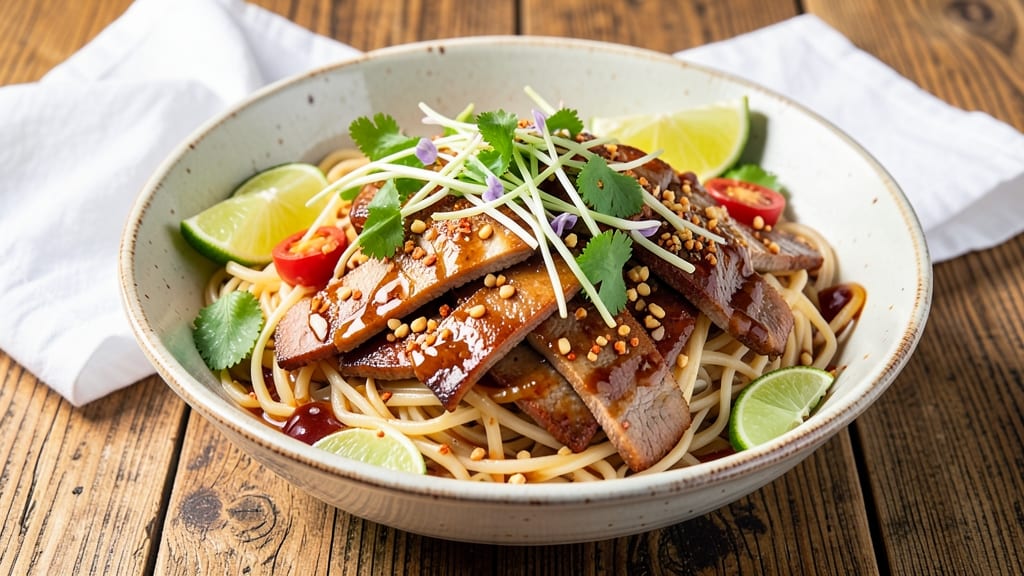
This authentic pork pad Thai recipe brings Bangkok street food to your kitchen with its signature crispy rice noodles and tangy tamarind glaze. 🌟 After years of perfecting the balance between sweet, sour, and umami, I've mastered the technique that delivers that iconic wok hei flavor at home.
The secret lies in the sauce—tamarind, fish sauce, and palm sugar must harmonize perfectly for that signature pad Thai tang.
What sets this recipe apart is the authentic preparation method: we start by par-cooking the noodles just until they're pliable, then finish them in the wok with the pork and sauce. This creates that signature crispy texture while keeping the noodles tender inside.
The pork is marinated in a simple yet flavorful blend that ensures it stays juicy and develops a caramelized crust from the high-heat stir-fry.
By the time you're done, you'll have a dish that's vibrant, aromatic, and packed with contrasting textures—crispy noodles, tender pork, crunchy bean sprouts, and fresh herbs. The tamarind glaze should be sticky yet balanced, with just enough heat from the chili to wake up your palate.
This is the kind of pad Thai that makes you forget you're not eating at a Bangkok street stall.
Serve it immediately with extra lime wedges and crushed peanuts on the side for that true street-food experience. The key to success is timing—everything needs to come together at once for maximum flavor impact. Let's get cooking!
Ingredients for authentic pork pad thai
Crispy noodles, tender pork, and that signature tangy glaze—here's what makes this pad Thai shine.
| Ingredient | Amount | Notes |
|---|---|---|
| Rice Noodles 🍜 | 8 oz | Flat, medium-width, dried |
| Pork Shoulder 🐷 | 1 lb | Thinly sliced, boneless |
| Tamarind Paste 🍯 | ¼ cup | Unsweetened, thick consistency |
| Fish Sauce 🐟 | ¼ cup | Red Boat brand preferred |
| Palm Sugar 🍬 | ¼ cup | Or light brown sugar |
| Lime Juice 🍋 | ½ cup | Freshly squeezed |
| Soy Sauce 🍶 | ¼ cup | Light or regular |
| Garlic Cloves 🧄 | 6 cloves | Minced, fresh |
| Chili Flakes 🌶️ | 1 tbsp | Adjust for heat preference |
| Bean Sprouts 🌱 | 3 cups | Fresh, rinsed |
| Green Onions 🧅 | ¼ cup | Thinly sliced, white and green parts |
| Fresh Basil Leaves 🌿 | ¼ cup | Thai basil if available |
| Crushed Peanuts 🥜 | ¼ cup | Roasted, unsalted |
| Vegetable Oil 🫒 | ½ cup | High smoke point |
| Salt 🧂 | 1 tsp | Kosher or sea salt |
The tamarind paste is non-negotiable for that authentic tang. Asian markets carry the best quality—look for thick, block form and grate it fresh. If you can't find tamarind, substitute lime juice with a splash of vinegar, but it won't be quite the same. The pork should be thinly sliced against the grain for tenderness. Costco often has pre-sliced pork shoulder, but if you're cutting it yourself, freeze it 30 minutes first for cleaner slices. Bean sprouts? Trader Joe's has the freshest—just rinse them well before using.
No tamarind? Double the lime juice and add 1 tsp vinegar for a close substitute. The fish sauce is essential—Red Boat is the gold standard, but any reputable brand works. Palm sugar is key for that caramelized balance; if you can't find it, light brown sugar works in a pinch. For the chili, adjust to taste—some Thai markets sell pre-mixed pad Thai seasoning if you're feeling lazy. The garlic should be minced finely—no big chunks—or it'll overpower the delicate flavors. Fresh basil is ideal, but dried oregano at half the amount gets you close if you're in a bind.
Rice noodles keep best in a cool, dry place—not the fridge. Once cooked, they're ready to stir-fry immediately. The sauce can be made ahead and stored for 3 days in the fridge, but the pork marinade should go in right before cooking. For crispy noodles, work fast—they go from perfect to mushy in seconds. Serve with extra lime wedges and crushed peanuts on the side—trust me, it makes all the difference
Why You'll Love This Recipe
- Fridge-to-Table Speed: I swear by this for nights when I’m starving but can’t be bothered to chop a million things—just boil noodles, slice pork thin, and toss. The tamarind and fish sauce do all the heavy lifting while I’m still wiping my hands.
- Taste Like a Street Cart: That perfect balance of sour (tamarind), salty (fish sauce), and caramelized sweetness (palm sugar) hits every time. The pork shoulder stays juicy, and the noodles soak up just the right amount of sauce—no soggy mess here.
- Lunchbox Hero: Between us, this is my go-to for meal prep. Toss it with crushed peanuts and lime before packing, and it stays fresh for days. Honestly, my kids would rather eat this cold than a sad sandwich—no complaints from me.
- Budget Win: Pork shoulder stretches farther than you’d think, and a little tamarind paste goes a long way. I make this for four people for under $15, and somehow there’s always leftovers for lunch the next day. (Yes, even on a Tuesday night.)
Step-by-step instructions for authentic pork pad Thai
Here's how to make restaurant-quality Pad Thai with perfectly crispy noodles and a tangy, balanced sauce.
🍳 Step 1: Prepare the Tangy Tamarind Sauce
In a small bowl, whisk together the 0.25 cup tamarind paste, 0.25 cup fish sauce, 0.25 cup palm sugar, 0.5 cup lime juice, and 0.25 cup soy sauce until the sugar dissolves completely. This sauce is the heart of your Pad Thai—its perfect balance of sweet, sour, and salty flavors. Taste and adjust: add more tamarind for sourness, sugar for sweetness, or fish sauce for saltiness. Here's the thing—this sauce should coat your tongue with complexity, not just one dominant flavor.
Set the sauce aside while you prep the remaining ingredients. The sauce will mellow as it sits, so don't worry if it seems strong now. I like to let it rest for 5 minutes before using it—this allows the flavors to meld together beautifully.
🍳 Step 2: Cook the Pork Shoulder to Perfect Tenderness
Heat 0.25 cup vegetable oil in a large wok or skillet over medium-high heat until shimmering. Add the 1 lb thinly sliced pork shoulder and cook, stirring occasionally, for 4-5 minutes until the pork turns opaque and slightly crispy at the edges. You want the pork to develop a nice sear while remaining tender—overcooking will make it tough.
Add the 6 minced garlic cloves and 1 tbsp chili flakes, stirring for 30 seconds until fragrant. The garlic should sizzle and turn golden, releasing its aromatic oils. Remove the pork from the wok and set it aside—we'll add it back later when everything comes together.
🍳 Step 3: Soak and Cook the Rice Noodles
Fill a large bowl with hot water and add the 8 oz rice noodles. Let them soak for 20-30 minutes until pliable but still slightly firm to the touch. The noodles should be able to bend without breaking—this ensures they'll cook perfectly and become crispy when tossed with the sauce. Drain the noodles and rinse briefly with cold water to remove excess starch, then set aside.
In the same wok, add a bit more oil if needed and heat over medium heat. Add the drained noodles and toss them for 1-2 minutes until they begin to turn golden and crispy. This step is crucial for authentic texture—those crispy noodles are what make Pad Thai so satisfying. Don't overcrowd the wok or the noodles will steam instead of crisp.
🥘 Step 4: Assemble the Pad Thai with All Components
Return the cooked pork to the wok with the noodles. Pour in the prepared tamarind sauce and toss everything together vigorously for 1-2 minutes until the noodles are evenly coated and the sauce has thickened slightly. The wok should be hot enough to create a light sheen on the noodles without steaming them.
Add the 3 cups bean sprouts and 0.25 cup sliced green onions, tossing for another 30 seconds until the bean sprouts are just wilted but still crisp. The sprouts should add a fresh, crunchy contrast to the rich noodles. Remove from heat and let it rest for 1 minute—this helps the flavors meld together.
🍽️ Step 5: Finish and Serve with Fresh Herbs and Peanuts
Divide the Pad Thai among serving plates. Top each portion with 0.25 cup fresh basil leaves and 0.25 cup crushed peanuts, pressing them gently into the noodles. The basil adds a bright, almost floral note that cuts through the richness, while the peanuts provide a satisfying crunch with their nutty flavor.
Serve immediately while everything is hot and crispy. The perfect Pad Thai should have a balance of textures—crispy noodles, tender pork, crunchy sprouts and peanuts, and fresh herbs. Each bite should deliver that perfect harmony of sweet, sour, salty, and umami flavors that make this dish so addictive. Enjoy with lime wedges on the side for extra tang!
Pro Tips For Making Authentic Pork Pad Thai
- Cook Pork Shoulder Thin: Slice pork shoulder against the grain into paper-thin strips—no thicker than 1/8 inch. I used to cut them too thick, and they’d turn chewy instead of tender. A sharp cleaver and steady hand make this easier than it looks.
- Soak Noodles Just Right: Soak rice noodles in warm (not boiling) water for 5-7 minutes until pliable but still slightly firm. Over-soaking turns them mushy, and under-soaking makes them rubbery. Drain and rinse with cold water to stop cooking.
- Balance Tamarind Slowly: Start with half the tamarind paste called for, taste, then adjust—it’s sourer than you’d think. My first batch was too sharp because I added it all at once. A splash of fish sauce later fixes it, but better to nail it early.
- Wok First, Stir-Fry Last: Sear pork in a screaming-hot wok until browned, then remove it. Now you’ve got space to toss noodles and sauce without overcrowding. Adding everything at once just makes a soggy mess—trust me, I’ve done it.
Troubleshooting your authentic pork pad thai
Noodles Too Soft?
If your rice noodles turn mushy instead of crispy, you likely soaked them too long or didn't cook them fast enough over high heat. I find 20-25 minutes in hot water is perfect—they should bend but not break.
For crispy texture, work over medium-high heat and toss constantly for just 1-2 minutes after draining. Overcrowding the wok causes steaming instead of crisping. 🌟
Pork Too Tough?
Thinly sliced pork shoulder should cook in 4-5 minutes max over medium-high heat. If it's tough, your slices were too thick or you overcooked them. Freeze the pork 30 minutes before slicing for cleaner cuts, and use a sharp knife to slice against the grain.
For extra tenderness, marinate in 1 tbsp soy sauce + 1 tsp sugar for 20 minutes before cooking.
Sauce Too Strong?
The tamarind sauce needs balance—if it's overwhelmingly sour or salty, adjust while it rests. Add 1 tsp sugar for sweetness or 1 tsp lime juice for acidity. I often taste it again after 5 minutes of resting, as flavors meld.
For a milder version, reduce fish sauce by 1 tbsp and add 1 tsp palm sugar to compensate. 🍋
Bean Sprouts Overcooked?
Bean sprouts should stay crisp—toss them in for just 30 seconds at the end. If they wilt completely, you added them too early. Keep them separate until the final 1 minute of cooking.
For extra crunch, refresh them in ice water for 1 minute before adding to the wok. A splash of cold water in the wok can also revive them if needed.
Lacking Wok Hei?
That smoky, charred flavor comes from high heat and a well-seasoned wok. If your wok isn't hot enough, increase to high heat and let it smoke slightly before adding oil.
I season my cast iron wok with oil and heat it empty for 2 minutes before cooking. A gas flame works better than electric for authentic wok hei. 🔥
Peanuts Too Dry?
Store-bought crushed peanuts can be bland—always toast them fresh in a dry skillet over medium heat for 2-3 minutes until fragrant. For extra flavor, add ½ tsp sugar and ¼ tsp salt while toasting.
If they're too dry, lightly spray with oil before crushing. Freshly toasted peanuts make all the difference in that final crunch. 🥜
Nutrition facts
Frequently asked questions about authentic pork pad Thai
Can I substitute chicken or shrimp for the pork?
Shrimp cooks in just 2 minutes and pairs beautifully with the tangy sauce. For chicken, use 1 lb boneless, skinless breast or thigh, sliced thinly and cooked for 3-4 minutes until no longer pink. The key is keeping the protein tender—never overcook or it'll dry out. If using shrimp, toss them in the wok last for 30 seconds to keep them plump.
How do I make this vegetarian?
Swap the pork for 1 lb tofu (pressed and cubed) or 12 oz mushrooms (shiitake or oyster). For extra protein, add ½ cup edamame or ½ cup firm tofu crumbles. Boost umami by adding 1 tsp soy sauce to the sauce and 1 tbsp vegetarian fish sauce (like Veganamite). The texture contrast is key—keep those crispy noodles and crunchy toppings!
What's the secret to crispy noodles?
Three things: proper soaking, high heat, and constant tossing. Soak noodles in hot water for 20-25 minutes until pliable but still firm. Drain well, then cook over medium-high heat for just 1-2 minutes—they crisp instantly! Use a wok or large skillet and work in batches if needed. Overcrowding steams instead of crisps.
Can I make the sauce ahead of time?
Yes! The sauce keeps for 3 days in the fridge, but flavors deepen after 1 day of resting. For best results, let it sit at room temperature for 10 minutes before using—this helps the tamarind and sugar fully meld. If it thickens too much, thin with 1 tsp water. Never boil the sauce or it'll lose its delicate balance.
Why does my pad thai taste flat?
Most likely, your sauce needs more balance. Add ½ tsp lime zest for brightness or 1 tsp toasted sesame oil for depth. Check your tamarind—if it's too sweet, add 1 tsp fish sauce for saltiness. Fresh herbs are crucial too—don't skip the basil! For extra umami, stir in ½ tsp MSG (optional) or a splash of oyster sauce. Taste as you go!