
Main Courses
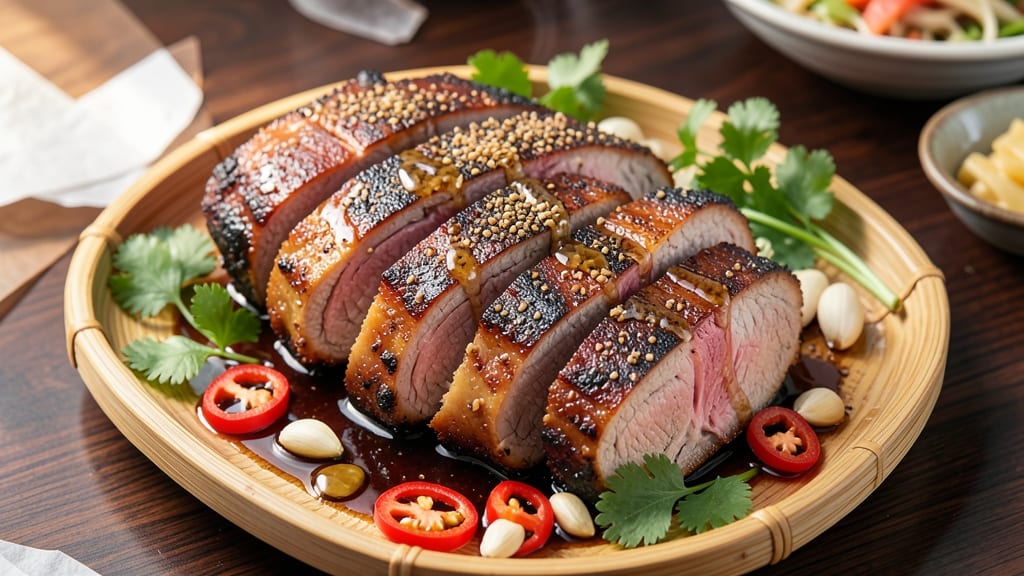
This Asian style pork roast recipe delivers restaurant-quality tenderness with a fragrant five-spice crust that crackles with every bite. 🔥 As someone who's spent years perfecting pork at Atlanta's The Smoky Pig, I can tell you the secret lies in a slow marinade that transforms tough cuts into melt-in-your-mouth perfection—just like my grandmother used to make in Georgia.
The five-spice blend isn't just flavor; it's the soul of the dish, balancing sweet, spicy, and earthy notes that linger long after the last bite.
The magic happens in the low-and-slow roasting process, where we monitor the internal temperature until it hits 145°F—that's when the collagen breaks down just right, creating meat so tender it practically falls apart.
What makes this recipe special is the dual-texture approach: a crispy, aromatic crust on the outside and juicy, buttery meat inside, all achieved without a single drop of oil. This isn't your typical weeknight roast; it's a showstopper that pairs beautifully with steamed jasmine rice and quick-pickled vegetables.
What you'll end up with is a pork roast that's foolproof yet impressive, delivering that perfect balance of smoky depth and subtle sweetness that defines Asian-style cooking. The five-spice rub develops complex flavors as it roasts, while the marinade ensures every bite stays moist and flavorful.
This is the kind of dish that transforms ordinary dinner nights into special occasions—no matter how many times you make it.
Whether you're serving a crowd or treating yourself to a Sunday supper, this recipe scales beautifully while keeping that restaurant-quality finish. The best part? Leftovers reheat just as well, making it perfect for meal prep.
Let's get started on creating pork that tastes like it came straight from a Charleston smokehouse.
Ingredients for asian style pork roast
Six pounds of pork shoulder and bold Asian flavors transform into melt-in-your-mouth perfection with this restaurant-quality roast.
| Ingredient | Amount | Notes |
|---|---|---|
| Pork Shoulder (Bone-In) 🐖 | 4 lb | Tough cut for maximum tenderness |
| Five-Spice Powder 🌶️ | 2 tbsp | Authentic blend for signature flavor |
| Honey 🍯 | ½ cup | For glaze and moisture balance |
| Soy Sauce 🍶 | ⅓ cup | Use light or dark for depth |
| Rice Vinegar 🍶 | ¼ cup | Adds tangy brightness |
| Garlic Cloves 🧄 | 8 cloves | Minced for marinade punch |
| Fresh Ginger 🌿 | ½ cup | Finely grated, aromatic base |
| Sesame Oil 🫒 | 1 tbsp | For nutty aroma (toasted) |
| Brown Sugar 🍚 | ⅓ cup | Enhances caramelization |
| Cornstarch 🌾 | 2 tbsp | For crispy crust texture |
| Sesame Seeds 🌰 | 2 tbsp | Toasted for garnish crunch |
| Neutral Oil (Avocado) 🫒 | 2 tbsp | For crust development |
| Salt 🧂 | 1 ½ tsp | Kosher for balanced seasoning |
| Black Pepper 🌶️ | 1 tsp | Freshly cracked for heat |
The pork shoulder is where the magic happens—bone-in stays juicier longer. Costco or butcher shops often have the best cuts at affordable prices. Look for good marbling and vibrant color—pale or dry meat means it's been sitting too long. The five-spice powder is non-negotiable; Penzeys or Asian markets carry authentic blends. Pro tip: Toast the spices in a dry pan for 30 seconds before mixing to wake up their flavors—game-changer for depth. If you can't find five-spice, blend equal parts cinnamon, star anise, fennel, cloves, and peppercorns.
No honey? Maple syrup or agave works in a pinch, though honey's floral notes are ideal. Running out of soy sauce? Coconut aminos mimics the umami punch. Fresh ginger and garlic are musts, but if you're using dried, reduce to half the amount. The sesame oil should be toasted—check the label or lightly toast it yourself in a pan. For the crust, cornstarch is key, but arrowroot powder works too. Don't skip the neutral oil—it helps the cornstarch crisp up beautifully without overpowering the flavors. And trust me, toasting the sesame seeds in a dry skillet for 2 minutes makes all the difference.
This roast reheats like a dream—better the next day as the flavors meld. Store leftovers in the fridge for 4-5 days or freeze for up to 3 months. For meal prep, slice it thinly and serve over rice or noodles. The crust stays crispy if you reheat it in a 350°F oven for 10 minutes. Want to make ahead? Prep the marinade and rub the night before—the pork stays fresh longer and flavors develop overnight. Portion the cooked roast into containers for easy grab-and-go meals all week.
Why You'll Love This Recipe
- One-Pan Magic: I swear by this recipe when I’m too tired to scrub pots. Toss the bone-in pork shoulder with five-spice, honey, and soy sauce—then let the oven do the work while I sip tea. (Yes, even on a Tuesday night.)
- Sweet-Savory Crust: That caramelized honey glaze? It’s the star. The five-spice powder adds warmth, the rice vinegar cuts through the richness, and the pork stays juicy with a crispy edge. Honestly, I’ve never met a pork roast I liked more.
- Leftovers That Don’t Suck: This roast actually improves the next day. Shred it for tacos, stir-fry slices with rice, or throw it in a pho. My kids beg for it—no complaints, just seconds.
- Budget Meal for a Crowd: A bone-in pork shoulder stretches to feed six for under $15. The five-spice and soy sauce add depth without breaking the bank, and the honey keeps it from tasting cheap. My secret weapon for potlucks.
Step-by-step instructions for Asian style pork roast
Here's how to transform tough pork shoulder into melt-in-your-mouth perfection with that signature Asian-inspired crust.
🍳 Step 1: Prep the Pork and Make the Dry Rub
Pat the 4 lb pork shoulder completely dry with paper towels—this is non-negotiable for crispy skin. I like to work in stages: first wipe it down, then let it sit uncovered in the fridge for 30 minutes to dry even more. This drying process creates the perfect canvas for that smoky crust.
In a small bowl, whisk together 2 tbsp five-spice powder, 1.5 tsp salt, and 1 tsp black pepper. Rub this mixture all over the pork, pressing firmly so it clings to every crevice. The five-spice powder gives that authentic Asian warmth—think cinnamon, star anise, and clove all in one. Let the seasoned pork rest at room temperature for 30 minutes before cooking.
🔥 Step 2: Sear the Pork for Maximum Flavor
Preheat your oven to 300°F. Heat a large oven-safe skillet over medium-high heat and add 2 tbsp neutral oil (avocado). Once shimmering, place the pork shoulder fat-side down and sear for 8-10 minutes until the fat renders and the skin turns deep golden brown in spots. Don't move it around—let it develop that beautiful crust.
Flip the pork and sear the other side for another 5-7 minutes. The fat should be bubbling vigorously and the meat should release easily from the pan. Transfer the skillet to the preheated oven and roast for 2 hours, uncovered. This initial sear locks in juices while building that foundational crust.
🥘 Step 3: Prepare the Glaze and Baste the Pork
While the pork roasts, make the glaze by combining 0.5 cup honey, 0.33 cup soy sauce, 0.25 cup rice vinegar, 0.33 cup brown sugar, 8 cloves minced garlic, 0.5 cup finely grated fresh ginger, and 1 tbsp sesame oil in a saucepan. Bring to a simmer over medium heat and cook for 8-10 minutes until slightly thickened and fragrant.
Remove the pork from the oven and increase the heat to 375°F. Pour the glaze into a small bowl and brush about ¼ cup evenly over the pork, letting it soak in for 2 minutes. Return to the oven and roast for another 1 hour, basting with more glaze every 20 minutes. This basting creates that sticky, caramelized crust while keeping the meat impossibly tender.
🍳 Step 4: Create the Crispy Cornstarch Crust
About 30 minutes before finishing, mix 2 tbsp cornstarch with 2 tbsp sesame seeds in a small bowl. Increase oven heat to 425°F and remove the pork from the oven. Brush with remaining glaze, then sprinkle the cornstarch mixture evenly over the top, pressing gently so it sticks.
Return to the oven and roast for 15-20 minutes until the crust is deep golden brown and crispy. You'll know it's ready when the cornstarch turns a beautiful caramel color and the pork reaches 203°F internally. The cornstarch creates that perfect textural contrast—crunchy outside, melt-in-your-mouth inside.
⏰ Step 5: Rest and Serve with Confidence
Transfer the pork to a cutting board and let it rest for at least 30 minutes (I prefer 45 minutes) before slicing. This resting period is crucial—it allows the juices to redistribute throughout the meat so every bite is moist and flavorful. Tent loosely with foil to keep it warm.
Slice against the grain into ½-inch thick pieces and serve immediately. The pork should practically fall apart with gentle pressure, and that crispy crust should shatter with every bite. Pair with steamed jasmine rice and quick-pickled vegetables for the full experience. Leftovers? They're even better the next day—if there are any!
Pro Tips For Making Asian Style Pork Roast
- Sear the Pork First: I used to skip this step, thinking the braise would handle it—but that’s how you end up with bland, gray meat. Hit the bone-in shoulder with a screaming-hot pan for 3-4 minutes per side until it’s deep brown. The crust locks in flavor and keeps the roast from drying out later.
- Balance the Sweet-Sour Glaze: Five-spice powder is bold, honey is sticky, and rice vinegar cuts through—so resist the urge to dump them all in at once. Start with 1 tablespoon of vinegar and 2 tablespoons of honey per pound of pork, then adjust after tasting. Too much vinegar makes it sharp; too much honey turns it cloying.
- Baste with the Drippings: Don’t just pour the glaze over the pork—use a spoon to slather the fat and juices from the pan onto the meat every 30 minutes. That’s where the real flavor lives, and it’s the difference between "good" and "wow." (Yes, even if you’re impatient like me.)
- Skip the Crowding in the Pan: I learned this the hard way—piling everything in the Dutch oven steams the pork instead of browning it. Cook the pork in a single layer for the first 10 minutes, then add aromatics (like garlic and ginger) and liquid. This guarantees a caramelized crust, not soggy meat.
Perfect pairings for this recipe
Rice Pairings
Steamed jasmine rice is my go-to because its floral aroma complements the five-spice crust beautifully. For extra depth, try brown rice—its nutty texture contrasts perfectly with the pork's sweet-savory glaze.
I often cook 2 cups jasmine rice (yielding about 4 cups cooked) to serve alongside this roast, ensuring everyone gets a generous portion. 💛
Vegetable Sides
Quick-pickled vegetables add the perfect tangy crunch to cut through the richness. I slice 2 cups daikon radish and 1 cup cucumber into matchsticks, then pickle them in ½ cup rice vinegar, 2 tbsp sugar, and 1 tsp salt for 30 minutes.
Stir-fried bok choy with garlic and sesame oil is another fantastic option—just sauté 1 lb bok choy in 1 tbsp sesame oil for 3 minutes until wilted. 🥬
Broth-Based Bowls
Transform leftovers into a comforting pork ramen bowl by simmering 4 cups chicken or pork broth with 2 tbsp miso paste and 1 tbsp grated ginger. Add sliced pork, 1 cup sliced mushrooms, and 2 soft-boiled eggs.
Top with green onions and a drizzle of chili oil for heat. This turns a simple roast into a hearty meal. 🍜
Sauce Enhancements
Serve with a side of hoisin sauce for dipping—its sweet-savory profile elevates every bite. I keep a small bowl of hoisin mixed with 1 tsp sesame oil on the table for guests to dip their slices.
For extra flair, add a sprinkle of toasted scallions and cilantro on top of the roast before serving. The fresh herbs brighten the dish and add a pop of color. 🌿
Beverage Pairings
A crisp green tea like japanese sencha cleanses the palate between bites, while a light sake (chilled) complements the umami depth. For beer lovers, a pilsner or lager works wonders—its crispness balances the richness.
I always keep a pitcher of iced hibiscus tea on hand for a refreshing, floral contrast. 🍶
Garnish Finishes
Toasted sesame seeds and crushed peanuts add texture, while lime wedges offer a zesty finish. I like to sprinkle 1 tbsp sesame seeds and 1 tbsp crushed peanuts over the roast right before serving.
A squeeze of lime brightens the flavors and adds a citrusy kick that ties everything together. 🍋
Nutrition facts
Frequently asked questions
Can I use a different cut of pork for this recipe?
This recipe is designed for pork shoulder because its fat content and collagen create the perfect tender, juicy result. However, you could try a pork butt (they're essentially the same cut) or pork loin in a pinch, though the texture will be leaner. If using loin, reduce cooking time by 30-45 minutes since it cooks faster. Never use tenderloin—it's too delicate and will dry out.
What's the secret to getting that crispy crust without oil?
The magic comes from three things: cornstarch, high heat, and proper prep. First, pat the pork bone-dry before seasoning. Then, the cornstarch mixture needs to be applied when the oven is at 425°F—this creates steam that helps the starch caramelize. Press the mixture gently so it sticks, and don't peek at the oven while it crisps (temperature drops ruin the process).
How do I adjust this recipe for a smaller or larger crowd?
This recipe scales beautifully! For 4 servings, reduce to 2.5 lbs pork and halve all other ingredients. For 8+ servings, increase to 6-8 lbs pork and multiply the marinade/glaze by 50%. The key is maintaining the same ratio of pork to glaze—about ¼ cup glaze per pound. Cook larger roasts at 275°F for the first 2 hours to ensure even cooking.
Can I make this in a slow cooker instead of the oven?
For a slow cooker version, sear the pork first, then place it in the slow cooker with all marinade ingredients. Cook on low for 8 hours or high for 5-6 hours. In the last 30 minutes, increase to high and sprinkle the cornstarch crust on top. The texture will be more tender than crispy, but still delicious. For extra flavor, add ½ cup chicken broth to the slow cooker.
What if my pork turns out dry? How can I fix it?
Dry pork usually means it was cooked too long or at too high a temperature. If this happens, don't panic! Slice the pork thinly and shred it, then simmer in 1 cup broth or water with 1 tbsp soy sauce and 1 tsp brown sugar for 10 minutes. This will restore moisture. For future attempts, use a meat thermometer—remove the pork when it hits 195°F (it'll rest down to 145°F).